Manufacturing Industries in India - II: Mineral-based — Flashcards
ICSE · Class 10 · Geography
38 flashcards for Manufacturing Industries in India - II: Mineral-based (ICSE Class 10 Geography) to test yourself on key terms and facts.
Interactive on Super Tutor
Studying Manufacturing Industries in India - II: Mineral-based? Get the full interactive chapter.
Quizzes, flashcards, AI doubt-solver and a step-by-step study plan — built for flashcards and more.
Free trial, no card needed.
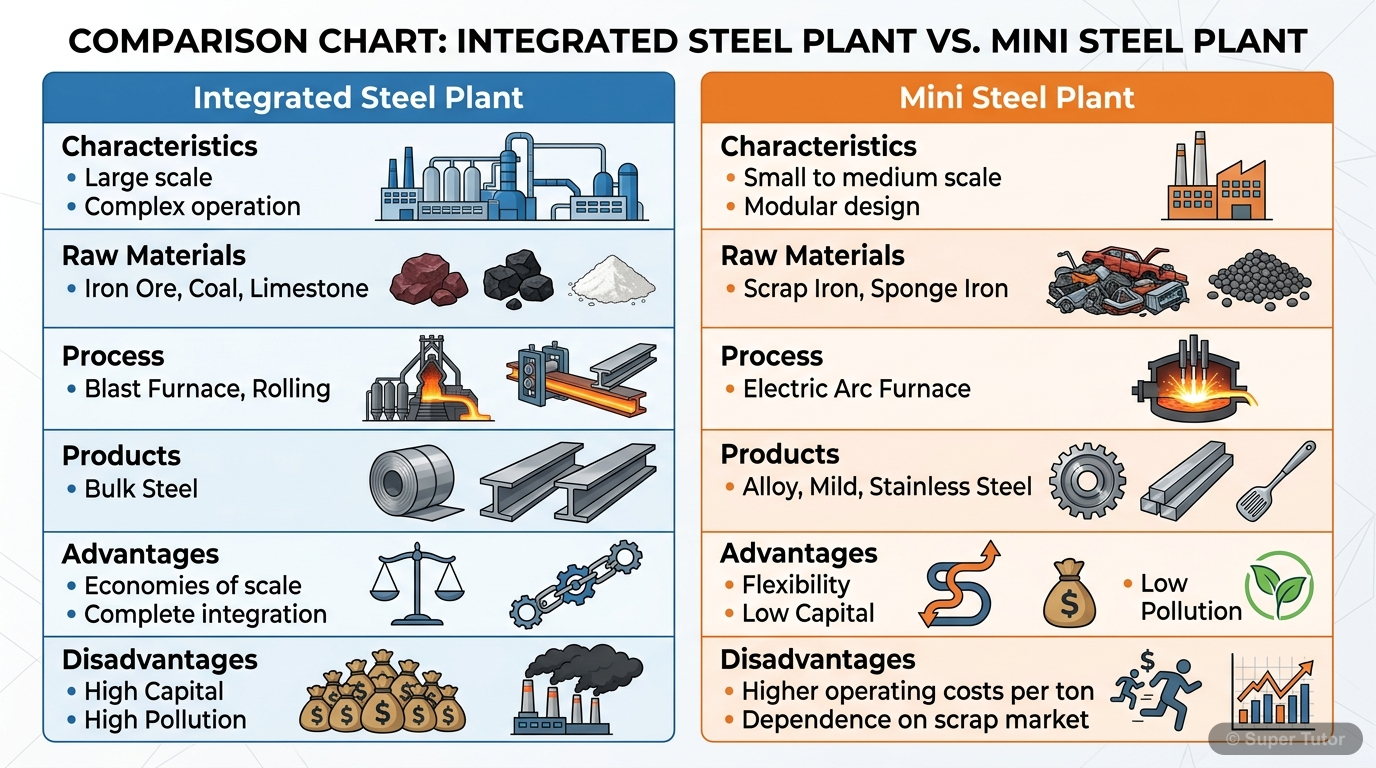
Learn better with visuals Super Tutor pairs illustrations like this with notes and quizzes for Manufacturing Industries in India - II: Mineral-based.
Get startedWhat is a mineral-based industry? Give one example.
Answer
A mineral-based industry is an industry that secures its raw materials from minerals. Iron and steel industry is a major example because it uses iron ore and other mineral inputs.
Why is the iron and steel industry called a basic industry?
Answer
It is called a basic industry because other industries depend on it. Steel is needed to make machinery, railway tracks, locomotives, ships, bridges, tools, defence equipment, and many more products.
What is an integrated steel plant?
Answer
An integrated steel plant is one where all the three processes from melting of iron ore in the blast furnace to steel making followed by shaping of the metal by rolling is carried out under one comple…
What are mini steel plants?
Answer
Mini steel plants are decentralized secondary units. They use electric arc and induction furnaces, and make steel from scrap iron and sponge iron.
What are the main products of mini steel plants?
Answer
Mini steel plants produce alloy steel, mild steel and stainless steel. They also produce liquid steel which is turned into ingots.
Why are mini steel plants considered useful for local demand?
Answer
They are usually located away from integrated plants and help meet local demand. They need less heavy capital investment, can be set up at convenient places, and use readily available scrap iron.
What is the main disadvantage of a mini steel plant?
Answer
The only disadvantage of a mini steel plant is that it is totally dependent on electric power. It also consumes more power per unit weight of steel than an integrated plant.
Name some places where mini steel plants are located.
Answer
Some mini steel plants are located at Kanpur, Jaipur, Pune, Hyderabad, Ranchi, Delhi and Bhopal.
+30 more flashcards
Practise AllFrequently Asked Questions
What are the important topics in Manufacturing Industries in India - II: Mineral-based for ICSE Class 10 Geography?
How many flashcards are available for Manufacturing Industries in India - II: Mineral-based?
How should I revise Manufacturing Industries in India - II: Mineral-based for the ICSE Class 10 board exam?
Sources & Official References
Content is aligned to the official syllabus. Refer to the board website for the latest curriculum.
More resources for Manufacturing Industries in India - II: Mineral-based
Practice Quiz
Test yourself with a quick quiz
Important Questions
Exam-style questions with answers
Revision Notes
Key points for last-minute revision
Chapter Summary
Understand the chapter at a glance
Concept Maps
See how topics connect
Study Plan
Step-by-step plan for this chapter
Syllabus
What topics to cover
For serious students
Get the full Manufacturing Industries in India - II: Mineral-based chapter — start free.
Quizzes, flashcards, an AI doubt solver and a study plan for ICSE Class 10 Geography. Free to start, no card needed.