Rise of Dictatorship Fascism and Nazism — Practice Quiz
ICSE · Class 10 · History & Civics
Try a 4-question quiz on Rise of Dictatorship Fascism and Nazism for ICSE Class 10 History & Civics: tap an answer to check it and see why.
Interactive on Super Tutor
Studying Rise of Dictatorship Fascism and Nazism? Get the full interactive chapter.
Quizzes, flashcards, AI doubt-solver and a step-by-step study plan — built for practice quiz and more.
Free trial, no card needed.
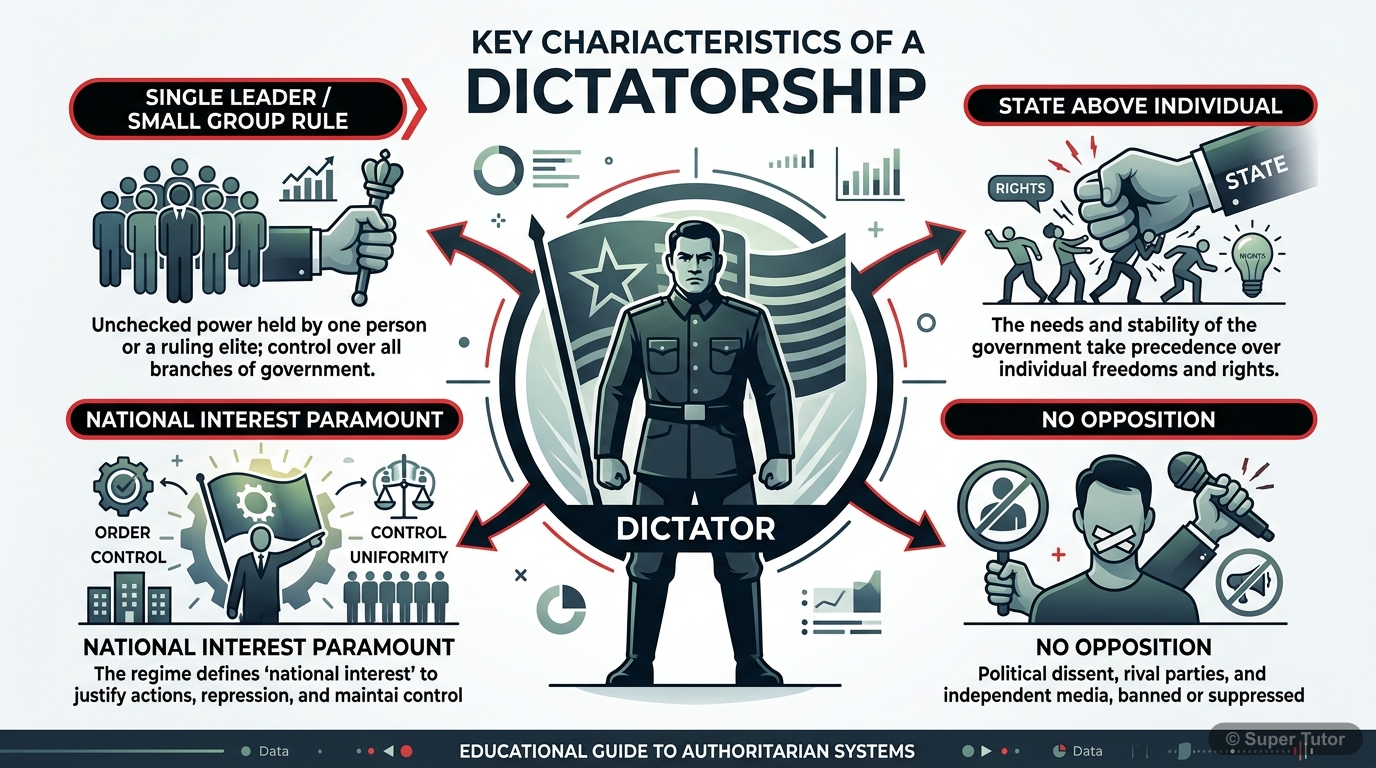
Learn better with visuals Super Tutor pairs illustrations like this with notes and quizzes for Rise of Dictatorship Fascism and Nazism.
Get startedQuick Quiz: Rise of Dictatorship Fascism and Nazism
0/4Tap an answer to check it instantly. No sign-up needed for these 4.
What does the term 'Fascism' derive from?
Who was the leader of the Fascist movement in Italy?
In which year did the March on Rome take place?
What was the name of the German constitution introduced in 1919?
Sample Questions
Who was the leader of Nazi Germany?
Show answer
Adolf Hitler
Adolf Hitler was the leader of the Nazi Party and became the dictator of Germany from 1933 to 1945. He was appointed Chancellor in January 1933 and later became President in 1934. Kaiser William II was the German ruler who fled after WWI. Hindenburg was the President who appointed Hitler as Chancellor. Goebbels was Hitler's propaganda minister, not the leader.
What was Germany forced to pay according to the Treaty of Versailles?
Show answer
£6 billion
According to the Treaty of Versailles, Germany was forced to pay compensation amounting to £6 billion as war reparations. This enormous sum created economic hardship for Germany and was one of the major causes of resentment that Hitler exploited. The other amounts (£3, £9, and £12 billion) are incorrect figures not mentioned in the treaty terms.
What were the fascist paramilitary groups in Italy called?
Show answer
Blackshirts
The fascist paramilitary groups in Italy were called 'Blackshirts' because of their distinctive black uniforms. They were recruited to break up strikes and kill socialist and communist leaders. Thousands of these Blackshirts participated in the March on Rome in 1922. Brownshirts were the Nazi paramilitary in Germany, not Italy. Greenshirts and Redshirts were not fascist paramilitary groups.
In which year did Hitler become Chancellor of Germany?
Show answer
1933
Hitler was appointed Chancellor of Germany on January 30, 1933, by President Hindenburg. This was after the Nazi Party emerged as the single largest party in the July 1932 elections. In 1932, Hitler was not yet Chancellor but was gaining power. In 1934, he became President after Hindenburg's death. 1935 was after he had already consolidated his power.
+38 more questions on Rise of Dictatorship Fascism and Nazism (ICSE Class 10 History & Civics)
Practise AllFrequently Asked Questions
What are the important topics in Rise of Dictatorship Fascism and Nazism for ICSE Class 10 History & Civics?
How many practice questions are there for Rise of Dictatorship Fascism and Nazism?
Sources & Official References
Content is aligned to the official syllabus. Refer to the board website for the latest curriculum.
More resources for Rise of Dictatorship Fascism and Nazism
Important Questions
Exam-style questions with answers
Revision Notes
Key points for last-minute revision
Chapter Summary
Understand the chapter at a glance
Concept Maps
See how topics connect
Study Plan
Step-by-step plan for this chapter
Flashcards
Quick-fire cards for active recall
Syllabus
What topics to cover
For serious students
Get the full Rise of Dictatorship Fascism and Nazism chapter — start free.
Quizzes, flashcards, an AI doubt solver and a study plan for ICSE Class 10 History & Civics. Free to start, no card needed.