Chapter 12 of 13
NCERT Solutions

Recent Innovations in Biotechnology

CBSE · Class 12 · Biotechnology

NCERT Solutions for Recent Innovations in Biotechnology — CBSE Class 12 Biotechnology.

5 concepts

Interactive on Super Tutor

Studying Recent Innovations in Biotechnology? Get the full interactive chapter.

Quizzes, flashcards, AI doubt-solver and a step-by-step study plan — built for ncert solutions and more.

1,000+ Class 12 students started this chapter today

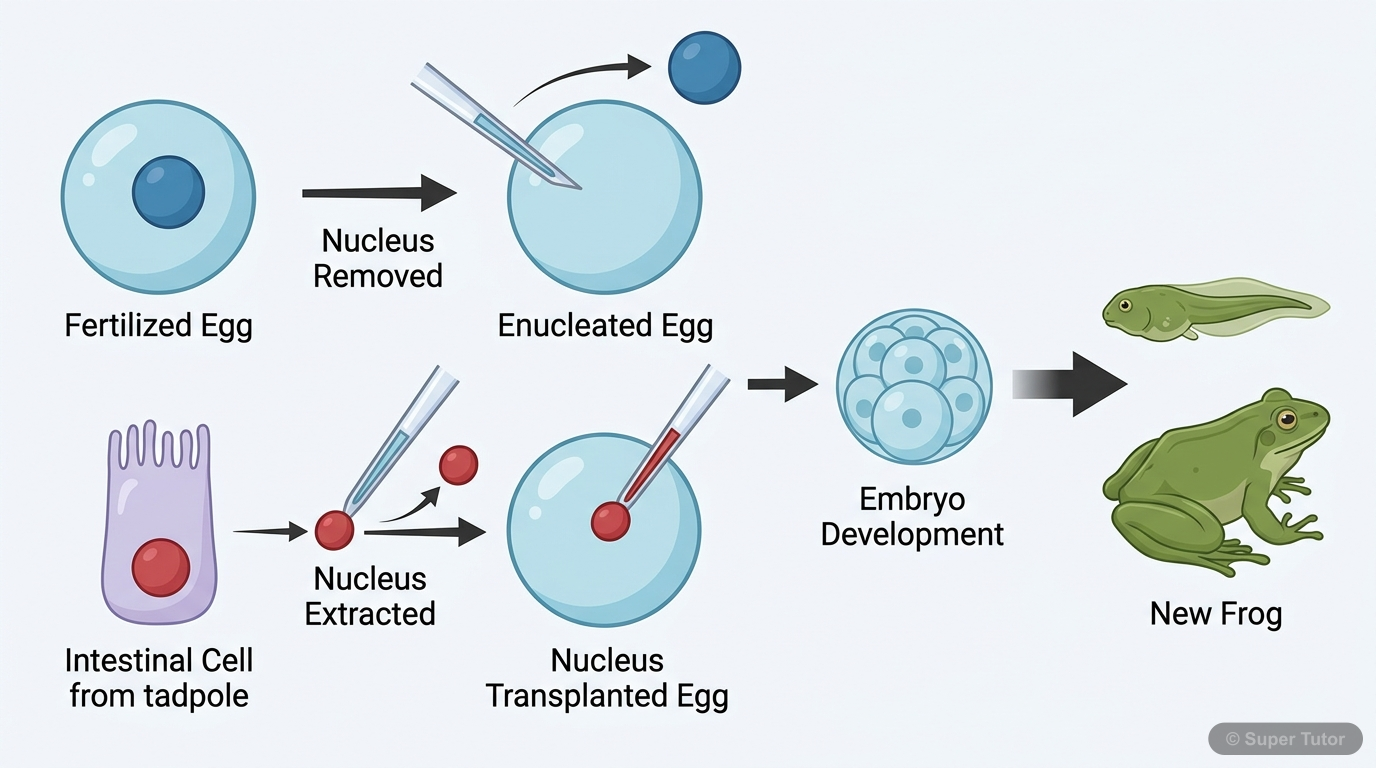
A step-by-step diagram illustrating John Gurdon's pioneering experiment of nuclear transplantation in frogs, showing the replacement of a fertilized egg's nucleus with a mature intestinal cell nucleus
Super Tutor

Learn better with visuals Super Tutor has hundreds of illustrations like this across every chapter — all free to try.

Get started
15 Questions Solved · 1 Section

EXERCISES — Recent Innovations in Biotechnology

1What are the advantages of biodiesel?Show solution
Given/Concept: Biodiesel is a biofuel produced from biological raw materials such as vegetable oils, animal fats, and recycled cooking oil through a process called transesterification.

Advantages of Biodiesel:

1. Renewable Source: Biodiesel is produced from renewable biological sources (vegetable oils, animal fats), unlike fossil fuels which are finite.

2. Reduced Greenhouse Gas Emissions: Biodiesel produces significantly lower net CO₂ emissions because the CO₂ released during combustion is offset by the CO₂ absorbed by the source plants during photosynthesis.

3. Biodegradable: Biodiesel is biodegradable and non-toxic, making it environmentally safer in case of spills.

4. Reduced Particulate Emissions: Biodiesel reduces particulate emissions from unburnt carbon, leading to cleaner combustion.

5. Lower Sulphur Content: Biodiesel contains little to no sulphur, thereby reducing sulphur dioxide (SO₂) emissions that cause acid rain.

6. Energy Security: It reduces dependence on imported fossil fuels, enhancing national energy security.

7. Compatible with Existing Engines: Biodiesel can be used in existing diesel engines with little or no modification, either as a pure fuel (B100) or blended with petroleum diesel.

8. Higher Lubricity: Biodiesel improves engine lubrication, potentially extending engine life.

9. Economic Benefits: It supports the agricultural sector by creating demand for oil-seed crops and promotes rural employment.

Conclusion: Biodiesel is a cleaner, renewable, and environmentally friendly alternative to conventional diesel fuel.
2Enlist the differences between biodegradation and bioremediation.Show solution
Given/Concept: Both biodegradation and bioremediation are biological processes used in environmental biotechnology, but they differ in scope, mechanism, and purpose.

| Feature | Biodegradation | Bioremediation |
|---|---|---|
| Definition | The breakdown of organic substances by microorganisms (bacteria, fungi) into simpler, non-toxic compounds. | The use of living organisms (microbes, plants) to remove, neutralise, or detoxify pollutants from a contaminated environment. |
| Scope | Primarily involves decomposition of organic matter. | Broader scope — includes degradation of organic pollutants as well as removal/transformation of inorganic pollutants (e.g., heavy metals). |
| Agents involved | Mainly microorganisms (bacteria, fungi, algae). | Microorganisms, plants (phytoremediation), and fungi. |
| End products | Simpler molecules such as CO₂, H₂O, and inorganic salts. | Pollutants are converted to less toxic or non-toxic forms; heavy metals may be immobilised or accumulated. |
| Target pollutants | Organic compounds (e.g., cellulose, plastics, pesticides). | Both organic compounds and inorganic pollutants (e.g., As, Cr, Hg, Cd, Zn). |
| Purpose | Recycling of nutrients; waste decomposition. | Restoration of contaminated soil, water, or air to a clean state. |
| Example | Decomposition of agricultural waste by bacteria. | Use of *Pseudomonas* to clean up oil spills; use of plants to absorb heavy metals from soil. |

Conclusion: Biodegradation is a subset of bioremediation. Bioremediation is a broader, applied strategy that uses biodegradation (among other processes) to clean up polluted environments.
3Explain how biofuel is better than fossil fuels.Show solution
Given/Concept: Biofuels are fuels derived from biological sources (crops, waste, living organisms), whereas fossil fuels (coal, petroleum, natural gas) are derived from ancient organic matter buried underground over millions of years.

Biofuels are better than fossil fuels in the following ways:

1. Renewable Nature:
- Biofuels are produced from renewable biological sources (sugarcane, corn, algae, vegetable oils) that can be replenished.
- Fossil fuels are non-renewable and will eventually be exhausted.

2. Lower Net Carbon Emissions (Carbon Neutrality):
- The CO₂ released on burning biofuels is roughly equal to the CO₂ absorbed by the source plants during growth, making them nearly carbon-neutral.
- Fossil fuels release CO₂ that has been locked underground for millions of years, significantly increasing atmospheric CO₂ and contributing to global warming.

3. Reduced Air Pollution:
- Biofuels produce fewer toxic pollutants such as sulphur dioxide (SO₂), particulate matter, and unburnt hydrocarbons.
- Fossil fuels release large amounts of SO₂ (causing acid rain), NOₓ, and particulate matter.

4. Biodegradable:
- Biofuels are biodegradable and less harmful in case of accidental spills.
- Fossil fuel spills (e.g., oil spills) cause severe, long-lasting environmental damage.

5. Energy Security:
- Biofuels can be produced locally from agricultural waste and crops, reducing dependence on imported fossil fuels.

6. Waste Utilisation:
- Biofuels can be produced from agricultural residues, landfill gas, and recycled vegetable oil, thereby reducing waste.

7. Economic Benefits:
- Biofuel production supports farmers and rural economies.

Conclusion: Although biofuels currently have lower energy density than fossil fuels, their environmental, economic, and sustainability advantages make them a superior long-term energy alternative.
4Enumerate the challenges in growing 3D cultures.Show solution
Given/Concept: Three-dimensional (3D) cell cultures, including organoids and spheroids, are advanced tissue models that better mimic in vivo conditions compared to traditional 2D monolayer cultures. However, growing 3D cultures presents several significant challenges.

Challenges in Growing 3D Cultures:

1. Nutrient and Oxygen Diffusion:
- In 3D structures, cells in the core/interior may not receive adequate oxygen and nutrients, leading to necrosis (cell death) at the centre of the culture.

2. Waste Removal:
- Metabolic waste products accumulate in the interior of 3D cultures, creating a toxic microenvironment that can affect cell viability and function.

3. Reproducibility and Standardisation:
- 3D cultures are difficult to reproduce consistently. Variations in size, shape, and cellular composition make standardisation challenging across experiments and laboratories.

4. Complexity of Extracellular Matrix (ECM):
- Providing an appropriate ECM (e.g., Matrigel or hydrogel) that mimics the in vivo environment is technically demanding and expensive.

5. Imaging and Analysis:
- Standard microscopy techniques used for 2D cultures are not easily applicable to 3D structures. Specialised imaging tools (e.g., confocal microscopy, light-sheet microscopy) are required, which are costly.

6. Drug Penetration:
- Testing drug efficacy is difficult because drugs may not penetrate uniformly into the 3D structure, leading to inaccurate results.

7. Vascularisation:
- 3D cultures lack a vascular system (blood vessels), which limits their size and long-term viability, and makes them imperfect models for in vivo conditions.

8. Cost and Technical Expertise:
- Growing and maintaining 3D cultures requires specialised equipment, biomaterials, and skilled personnel, making it expensive and technically demanding.

9. Scalability:
- Scaling up 3D cultures for high-throughput drug screening or therapeutic applications remains a major challenge.

Conclusion: Despite these challenges, 3D cultures represent a significant advancement over 2D models and ongoing research is addressing these limitations through bioengineering and microfluidic technologies.
5What are the applications of stem cells in generating organoids and spheroids?Show solution
Given/Concept: Stem cells (both pluripotent stem cells — PSCs, and adult stem cells — ASCs) have the unique ability to self-renew and differentiate into multiple cell types. This property is exploited to generate organoids and spheroids.

Applications of Stem Cells in Generating Organoids and Spheroids:

A. Organoids:
Organoids are ultra-small, self-assembled, three-dimensional tissue cultures derived from stem cells that mimic the structure and function of real organs.

1. Disease Modelling: Organoids derived from patient-specific stem cells (iPSCs) can model diseases such as cystic fibrosis, colorectal cancer, and inflammatory bowel disease, allowing study of disease mechanisms.

2. Drug Screening and Testing: Organoids serve as platforms for testing drug efficacy and toxicity before clinical trials, reducing the need for animal models.

3. Personalised Medicine: Patient-derived organoids can be used to test which drugs work best for an individual patient (personalised drug response testing).

4. Organ Development Studies: Organoids help scientists understand the developmental biology of organs such as the brain (cerebral organoids), intestine, liver, and kidney.

5. Regenerative Medicine: Organoids hold promise for generating tissue/organ substitutes for transplantation to replace damaged or diseased organs.

6. Infection Studies: Organoids can be infected with pathogens (e.g., SARS-CoV-2, norovirus) to study host-pathogen interactions.

B. Spheroids:
Spheroids are 3D aggregates of cells (not necessarily stem-cell derived) used primarily in cancer research.

1. Tumour Modelling: Cancer spheroids mimic the avascular tumour microenvironment, helping study tumour biology, hypoxia, and drug resistance.

2. Drug Penetration Studies: Spheroids are used to study how drugs penetrate solid tumours.

3. Stem Cell Expansion: Spheroid culture systems are used to expand stem cells while maintaining their pluripotency.

Conclusion: Stem cell-derived organoids and spheroids are powerful tools in biomedical research, offering physiologically relevant 3D models for disease modelling, drug development, and regenerative medicine.
6What are nanomaterials?Show solution
Definition:
Nanomaterials are materials that have at least one dimension in the nanoscale range, i.e., between 1 nm and 100 nm (10910^{-9} m to 10710^{-7} m). At this scale, materials exhibit unique physical, chemical, and biological properties that differ significantly from their bulk counterparts.

Key Features of Nanomaterials:

1. Size: Their dimensions range from 1 to 100 nanometres (nm). Nanoscience deals with materials in the range of 10910^{-9} to 101210^{-12} m.

2. High Surface Area to Volume Ratio: Nanomaterials have an extremely large surface area relative to their volume, which enhances their reactivity and interaction with other substances.

3. Unique Properties: At the nanoscale, materials show novel optical, electrical, magnetic, and mechanical properties not seen in bulk materials.
- Example: Gold nanoparticles appear red in colour (not yellow like bulk gold).
- Quantum dots exhibit size-dependent fluorescence.

Types/Examples of Nanomaterials:

| Type | Example |
|---|---|
| Carbon-based | Carbon nanotubes, Fullerenes (C₆₀) |
| Metal-based | Gold nanoparticles, Silver nanoparticles, Zinc oxide nanoparticles |
| Semiconductor | Quantum dots (CdSe, ZnS) |
| Polymeric | Nanoparticles made of biodegradable polymers |

Applications:
- Nanomedicine: Drug delivery, diagnostics, gene therapy.
- Nanobiosensors: Detection of disease biomarkers.
- Textiles: Carbon nanotubes are used to make fabrics.
- Electronics: Quantum dots used in optoelectronics.
- Environmental: Removal of pollutants.

Conclusion: Nanomaterials are the foundation of nanotechnology and nanobiotechnology, offering revolutionary applications across medicine, industry, and environmental science.
7Are there specific health risks from nano products?Show solution
Given/Concept: While nanotechnology and nano products offer enormous benefits, their extremely small size and unique properties also raise concerns about potential health and safety risks.

Specific Health Risks from Nano Products:

1. Penetration into Biological Systems:
- Due to their ultra-small size, nanoparticles can penetrate biological barriers such as the skin, lung epithelium, blood-brain barrier, and cell membranes, which larger particles cannot.
- This may lead to accumulation in organs (liver, spleen, brain) and cause toxicity.

2. Respiratory Risks:
- Airborne nanoparticles (e.g., carbon nanotubes, metal oxide nanoparticles) can be inhaled and deposit deep in the lungs (alveoli), potentially causing inflammation, fibrosis, or lung damage.
- Carbon nanotubes have been compared to asbestos fibres in terms of potential lung toxicity.

3. Cytotoxicity:
- Some nanoparticles (e.g., silver, zinc oxide, titanium dioxide) can generate reactive oxygen species (ROS), leading to oxidative stress, DNA damage, and cell death.

4. Genotoxicity:
- Certain nanoparticles may interact with DNA and cause mutations or chromosomal aberrations.

5. Immunotoxicity:
- Nanoparticles may trigger abnormal immune responses, including inflammation or allergic reactions.

6. Bioaccumulation:
- Nanoparticles may accumulate in the food chain (biomagnification), posing risks to ecosystems and human health.

7. Skin Absorption:
- Nanoparticles used in cosmetics and sunscreens (e.g., TiO₂, ZnO) may penetrate the skin and enter the bloodstream.

8. Quantum Dots Toxicity:
- Quantum dots often contain heavy metals (e.g., cadmium, lead) that are inherently toxic if released inside the body.

Regulatory Concern:
- The long-term effects of nano products on human health and the environment are not yet fully understood, and regulatory frameworks for nanotoxicology are still being developed.

Conclusion: While nano products hold great promise, their potential health risks necessitate thorough toxicological evaluation, proper safety regulations, and careful handling before widespread use.
8Organoids can be created from:
(a) Both Totipotent and Pluripotent Cells
(b) Both Pluripotent and Multipotent Cells
(c) Both Adult Stem Cells and Pluripotent Cells
(d) Both Adult Stem Cells and Multipotent Cells
Show solution
Correct Answer: (c) Both Adult Stem Cells and Pluripotent Cells

Justification:
As stated in the chapter, organoids are ultra-small, self-assembled three-dimensional tissue cultures derived from stem cells. They have been created from both Pluripotent Stem Cells (PSCs) — which include embryonic stem cells (ESCs) and induced pluripotent stem cells (iPSCs) — and Adult Stem Cells (ASCs), by simulating the biochemical and physical characteristics of tissue development and homeostasis. Totipotent and multipotent cells are not specifically mentioned as sources for organoid generation in this context.
9Incineration is:
(a) Extracting metals from their ores using microbes
(b) Treating waste, which involves the combustion of organic substances
(c) Degrading harmful chemicals and materials using microbes
(d) Remediation of harmful metals from the environment using microbes.
Show solution
Correct Answer: (b) Treating waste, which involves the combustion of organic substances

Justification:
Incineration is a waste treatment process that involves the combustion (burning) of organic substances at high temperatures, converting waste materials into ash, flue gas, and heat. It is used to reduce the volume of solid waste and destroy hazardous materials. Options (a), (c), and (d) describe bioleaching, biodegradation, and bioremediation respectively, which are microbe-based processes — not incineration.
10Ultra small, self-assembled, three dimensional tissue cultures derived from stem cells are called:
(a) Spheroids
(b) Organoids
(c) Monolayer Cells Culture
(d) Tissue Explants
Show solution
Correct Answer: (b) Organoids

Justification:
By definition, organoids are ultra-small, self-assembled, three-dimensional (3D) tissue cultures that are derived from stem cells (both pluripotent stem cells and adult stem cells). They mimic the architecture and function of real organs. Spheroids are 3D cell aggregates but are not necessarily stem-cell derived self-organised structures. Monolayer cell cultures are 2D, and tissue explants are pieces of tissue taken directly from an organism.
11What is the colour of the nano gold particles?
(a) Yellow
(b) Orange
(c) Red
(d) Variable
Show solution
Correct Answer: (c) Red

Justification:
Bulk gold appears yellow, but gold nanoparticles appear red in colour. This is due to a phenomenon called Surface Plasmon Resonance (SPR) — at the nanoscale, the conduction electrons of gold nanoparticles oscillate collectively in resonance with incident light, absorbing green light (~520 nm) and reflecting/transmitting red light, giving them a characteristic red colour. This is a classic example of how nanomaterials exhibit properties different from their bulk counterparts.
12Quantum dots can be used in:
(a) Crystallography
(b) Optoelectronics
(c) Mechanics
(d) Quantum physics
Show solution
Correct Answer: (b) Optoelectronics

Justification:
Quantum dots are semiconductor nanocrystals (e.g., CdSe, ZnS) that exhibit size-dependent optical and electronic properties due to quantum confinement effects. They emit light of specific wavelengths depending on their size, making them highly useful in optoelectronics — applications involving the interaction of light and electronics, such as LEDs, solar cells, display screens, and biological imaging/fluorescent labelling. They are not primarily used in crystallography, mechanics, or quantum physics research.
13Fabrics are extensively made out of nano materials like:
(a) Carbon nano tubes
(b) Fullerenes
(c) Mega tubes
(d) Polymers
Show solution
Correct Answer: (a) Carbon nano tubes

Justification:
Carbon nanotubes (CNTs) are extensively used in the textile/fabric industry. When incorporated into fabrics, CNTs impart exceptional properties such as high tensile strength, electrical conductivity, thermal stability, and resistance to stains and bacteria. Fullerenes (C₆₀) are spherical carbon nanomaterials not primarily used in fabrics. 'Mega tubes' is not a recognised nanomaterial. While polymers are used in textiles, they are not nanomaterials in the strict sense as described in this chapter.
14Assertion (A): Bt cotton is a transgenic plant.
Reason (R): Bt toxin provides resistance to plants against insects.
(a) Both assertion and reason are true and the reason is the correct explanation of the assertion.
(b) Both assertion and reason are true but the reason is not the correct explanation of the assertion.
(c) Assertion is true but reason is false.
(d) Both assertion and reason are false.
Show solution
Correct Answer: (b) Both assertion and reason are true but the reason is not the correct explanation of the assertion.

Justification:

- Assertion is TRUE: Bt cotton is indeed a transgenic plant because it has been genetically modified by introducing a foreign gene — the *cry* gene from the bacterium *Bacillus thuringiensis* (Bt) — into the cotton genome.

- Reason is TRUE: Bt toxin (produced by the *cry* gene) does provide resistance to plants against insects (specifically bollworm in the case of Bt cotton) by producing a protein that is toxic to certain insect larvae upon ingestion.

- However, the Reason is NOT the correct explanation of the Assertion: The assertion states that Bt cotton is transgenic. A plant is called transgenic because it contains a foreign gene from another organism — this is the defining characteristic of a transgenic organism. The fact that Bt toxin provides insect resistance explains *why* Bt cotton was created (its purpose/trait), but it does not explain *why* it is called transgenic. Therefore, the reason does not correctly explain the assertion.

Answer: (b)
15Assertion (A): Biodiesel is made from raw materials such as vegetable oils, animal fats, etc.
Reason (R): Biodiesel reduces the particulate emissions from unburnt carbon.
(a) Both assertion and reason are true and the reason is the correct explanation of the assertion.
(b) Both assertion and reason are true but the reason is not the correct explanation of the assertion.
(c) Assertion is true but reason is false.
(d) Both assertion and reason are false.
Show solution
Correct Answer: (b) Both assertion and reason are true but the reason is not the correct explanation of the assertion.

Justification:

- Assertion is TRUE: Biodiesel is indeed produced from biological raw materials such as vegetable oils (soybean, palm, canola), animal fats, and recycled cooking oils through a chemical process called transesterification.

- Reason is TRUE: Biodiesel does reduce particulate emissions from unburnt carbon compared to conventional petroleum diesel, because it burns more completely due to its oxygen content, resulting in fewer soot/particulate emissions.

- However, the Reason is NOT the correct explanation of the Assertion: The assertion is about the source/raw materials of biodiesel (what it is made from). The reason describes an environmental benefit/property of biodiesel (what it does when burned). The reduction of particulate emissions is a consequence of using biodiesel, not an explanation of why it is made from vegetable oils and animal fats. These are two independent, unrelated facts about biodiesel.

Answer: (b)

Stuck on a step?

Ask Super Tutor AI to explain any solution on this page in a simpler way — free, 24x7.

Ask a Doubt Free

Frequently Asked Questions

What are the important topics in Recent Innovations in Biotechnology for CBSE Class 12 Biotechnology?
Key topics in Recent Innovations in Biotechnology include Recent Innovations in Biotechnology Overview, Recent Innovations in Biotechnology Overview, Recent Biotechnology Innovations Overview. These are the concepts CBSE Class 12 examiners draw on most — study them first, then practise related questions.
How to score full marks in Recent Innovations in Biotechnology — CBSE Class 12 Biotechnology?
Start by understanding all key concepts. Practise previous year questions from this chapter. Revise formulas and definitions regularly. Use flashcards for quick revision before the exam.
Where can I get free NCERT Solutions for Recent Innovations in Biotechnology Class 12 Biotechnology?
This page has free step-by-step NCERT Solutions for every exercise question in Recent Innovations in Biotechnology (CBSE Class 12 Biotechnology) — written the way examiners award marks: given, formula, working, answer.

Sources & Official References

Content is aligned to the official syllabus. Refer to the board website for the latest curriculum.

For serious students

Get the full Recent Innovations in Biotechnology chapter — for free.

Quizzes, flashcards, AI doubt-solver and a step-by-step study plan for CBSE Class 12 Biotechnology.