Gandhian Nationalism (1916-1922) — Syllabus
ICSE · Class 11 · History
What Gandhian Nationalism (1916-1922) covers in ICSE Class 11 History: 4 topics, for the 2026-27 session. Part of the ICSE Class 11 History syllabus.
Interactive on Super Tutor
Studying Gandhian Nationalism (1916-1922)? Get the full interactive chapter.
Quizzes, flashcards, AI doubt-solver and a step-by-step study plan — built for syllabus and more.
Free trial, no card needed.
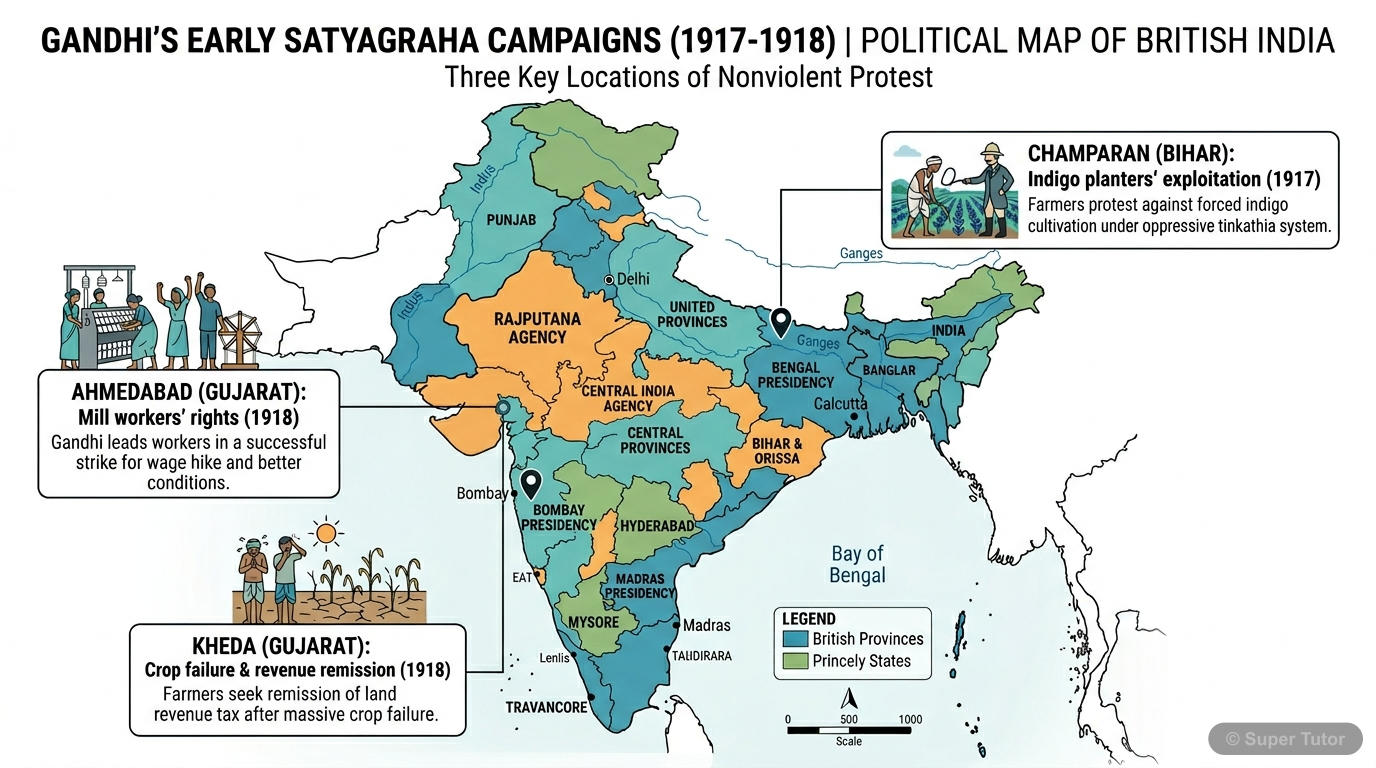
One of 4 illustrations for Gandhian Nationalism (1916-1922) in Super Tutor — alongside flashcards, concept maps and practice questions.
Topics in Gandhian Nationalism (1916-1922)
1. Gandhiji's Entry and Satyagraha
- Gandhiji returned to India in January 1915 and gradually became a national leader.
- He introduced passive resistance, also called Satyagraha, which had been practised earlier in South Africa.
- Gandhiji founded the Satyagraha Ashram near Ahmedabad in 1915 to spread the idea of Satyagraha.
2. Rowlatt Act and Rowlatt Satyagraha, 1919
- The Rowlatt Committee was appointed in 1917 under Justice Sydney Rowlatt to investigate revolutionary crime.
- Its recommendations led to the Rowlatt Act, a repressive war-time legislation made permanent.
- The law allowed detention without trial for up to two years.
3. Jallianwala Bagh Massacre and Its Impact
- Dr. Kichlew and Dr. Satyapal were arrested on 10 April 1919, which triggered the Jallianwala Bagh gathering.
- The Jallianwala Bagh massacre took place on 13 April 1919.
- General Dyer ordered troops to fire without warning on an unarmed crowd.
4. Khilafat Movement and the Growth of Hindu-Muslim Unity
- During the First World War, Turkey was part of the Central Powers.
- After the war, the Allied powers took a stern attitude towards Turkey and the Khalifa was removed from power.
- Indian Muslims started the Khilafat Movement to protect the Khalifa and the holy places of Islam.
Key Concepts
Central concept: Gandhian Nationalism from 1916 to 1922 and its transformation of the Indian national movement
Work through every topic in Gandhian Nationalism (1916-1922) with notes and quizzes
Start This ChapterFrequently Asked Questions
What are the important topics in Gandhian Nationalism (1916-1922) for ICSE Class 11 History?
How should I revise Gandhian Nationalism (1916-1922) for Class 11 exams?
Sources & Official References
Content is aligned to the official syllabus. Refer to the board website for the latest curriculum.
More resources for Gandhian Nationalism (1916-1922)
Practice Quiz
Test yourself with a quick quiz
Important Questions
Exam-style questions with answers
Revision Notes
Key points for last-minute revision
Chapter Summary
Understand the chapter at a glance
Concept Maps
See how topics connect
Study Plan
Step-by-step plan for this chapter
Flashcards
Quick-fire cards for active recall
For serious students
Get the full Gandhian Nationalism (1916-1922) chapter — start free.
Quizzes, flashcards, an AI doubt solver and a study plan for ICSE Class 11 History. Free to start, no card needed.