Sources of Energy — Practice Quiz
NIOS · Class 10 · Science & Tech
Try a 4-question quiz on Sources of Energy for NIOS Class 10 Science & Tech: tap an answer to check it and see why. 44 questions in the full chapter test.
Interactive on Super Tutor
Studying Sources of Energy? Get the full interactive chapter.
Quizzes, flashcards, AI doubt-solver and a step-by-step study plan — built for practice quiz and more.
Free trial, no card needed.
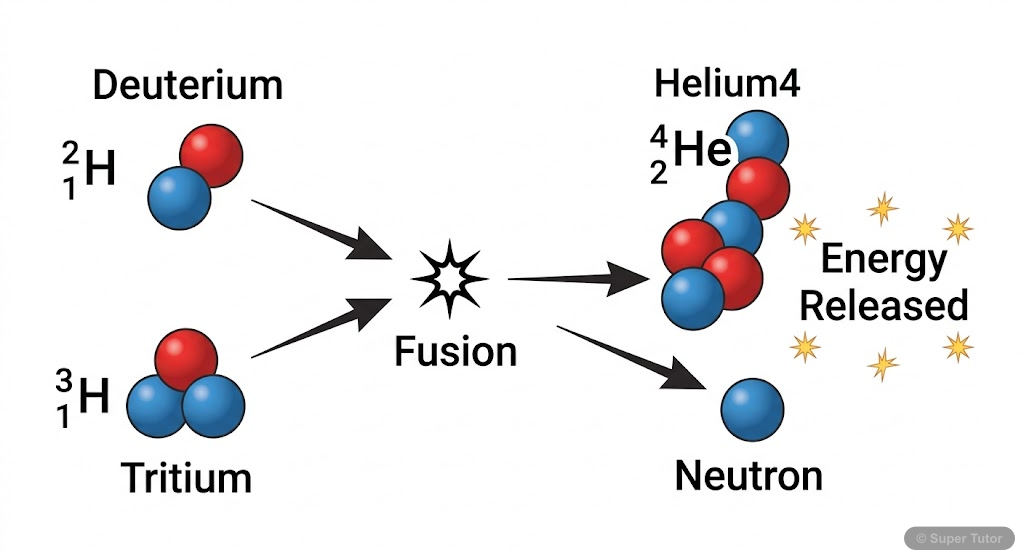
Learn better with visuals Super Tutor pairs illustrations like this with notes and quizzes for Sources of Energy.
Quick Quiz: Sources of Energy
0/4Tap an answer to check it instantly. No sign-up needed for these 4.
Which of the following is the ultimate source of energy for life on Earth?
Which type of coal has the highest calorific value?
In a nuclear reactor, what is used to control the fission reaction?
What is the main component of natural gas?
Sample Questions
Which of the following are fossil fuels?
Show answer
Coal, Natural gas, Petroleum
Step 1: Fossil fuels are formed from the remains of dead plants and animals buried millions of years ago. Step 2: Under high temperature and pressure, these organic materials transformed into coal, natural gas, and petroleum. Step 3: Coal formed from decomposed plant matter in swampy conditions. Step 4: Natural gas and petroleum formed from marine organisms and plants. Step 5: Solar energy, wind energy, and biomass are renewable sources, not fossil fuels formed from ancient organisms.
Energy can be created from nothing and destroyed completely.
Show answer
False
Step 1: According to the Law of Conservation of Energy, energy can neither be created nor destroyed. Step 2: Energy can only be transformed from one form to another form. Step 3: For example, when we burn coal, chemical energy transforms into heat energy, not gets created. Step 4: The total amount of energy in the universe remains constant. Step 5: This fundamental law applies to all energy transformations in nature and technology.
Which of the following are advantages of wind energy?
Show answer
Free of cost, Clean energy source, Renewable
Step 1: Wind energy is free because wind is a natural phenomenon that costs nothing to use. Step 2: It's clean because no harmful gases or pollutants are released during electricity generation. Step 3: Wind is renewable because it's created by solar heating of the atmosphere, which will continue as long as the sun shines. Step 4: However, wind is not always available - it depends on weather conditions and location. Step 5: Wind energy produces no pollution, making it environmentally friendly.
Solar panels directly convert sunlight into electricity.
Show answer
True
Step 1: Solar panels contain photovoltaic cells made of silicon semiconductors. Step 2: When sunlight hits these cells, photons knock electrons loose from silicon atoms. Step 3: This creates an electric current as electrons flow through the material. Step 4: This process directly converts light energy into electrical energy without any moving parts. Step 5: No heat or mechanical energy conversion is needed - it's a direct transformation from light to electricity.
+40 more questions on Sources of Energy (NIOS Class 10 Science & Tech)
Practise AllFrequently Asked Questions
What are the important topics in Sources of Energy for NIOS Class 10 Science & Tech?
How many practice questions are there for Sources of Energy?
Sources & Official References
Content is aligned to the official syllabus. Refer to the board website for the latest curriculum.
More resources for Sources of Energy
Important Questions
Exam-style questions with answers
Revision Notes
Key points for last-minute revision
Chapter Summary
Understand the chapter at a glance
Concept Maps
See how topics connect
Study Plan
Step-by-step plan for this chapter
Flashcards
Quick-fire cards for active recall
Syllabus
What topics to cover
For serious students
Get the full Sources of Energy chapter — start free.
Quizzes, flashcards, an AI doubt solver and a study plan for NIOS Class 10 Science & Tech. Free to start, no card needed.