Soil Resources in India
ICSE · Class 10 · Geography
Flashcards for Soil Resources in India — ICSE Class 10 Geography. Quick Q&A cards covering key concepts, definitions, and formulas.
Interactive on Super Tutor
Studying Soil Resources in India? Get the full interactive chapter.
Quizzes, flashcards, AI doubt-solver and a step-by-step study plan — built for flashcards and more.
1,000+ Class 10 students started this chapter today
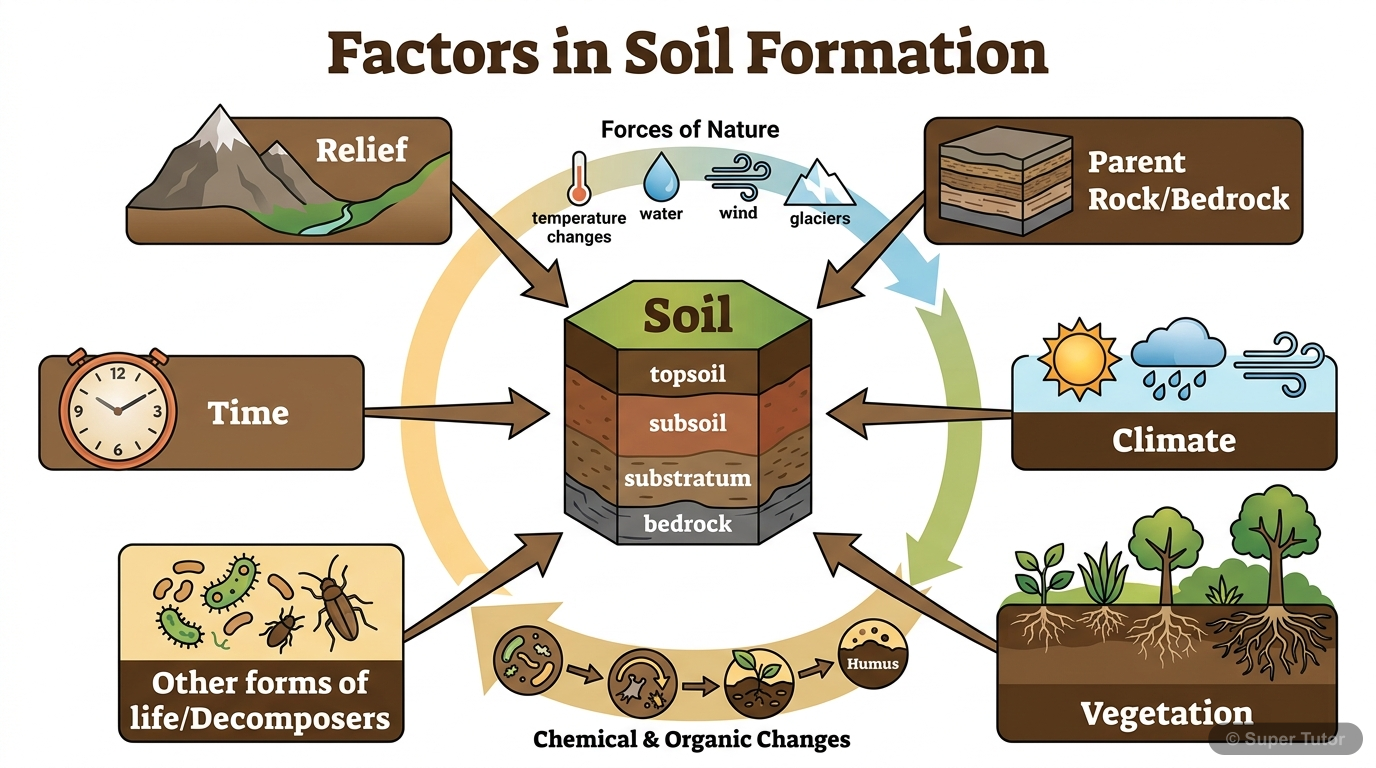
This is just one of 7+ visuals inside Super Tutor's Soil Resources in India chapter
Explore the full setWhat is soil?
Answer
Soil is the loose material that forms the thin surface layer of the Earth. It is a renewable natural resource, but it takes a long time to regenerate.
What is pedogenesis?
Answer
Pedogenesis is the scientific term for the process of soil formation. Soil forms through the weathering and breakdown of rocks, along with the action of climate, vegetation, relief, animals, insects, …
Which natural factors control soil formation?
Answer
Soil formation depends on parent rock material, relief, climate, and vegetation. Animals, insects, and human beings also affect soil formation by changing or mixing the soil.
What are the main components of soil?
Answer
Soil is made up of inorganic materials, organic matter, moisture, and air. The main inorganic components are silica, clay, and chalk. Organic matter includes humus.
What is humus and why is it important?
Answer
Humus is the ultimate form of organic matter in soil. It is formed by the decomposition of plant remains, animal waste, and dead animals. It is not a mineral. Humus improves soil fertility and helps t…
What are the functions of silica, clay, and chalk in soil?
Answer
Silica is the main constituent of sand and comes from rock disintegration. Clay is a mixture of silicates and other minerals and helps soil retain moisture. Chalk, or calcium carbonate, provides calci…
What is soil conservation?
Answer
Soil conservation is an effort made by humans to prevent soil erosion and retain the fertility of soil. It includes methods such as afforestation, contour ploughing, terracing, crop rotation, check da…
What is soil erosion?
Answer
Soil erosion is the removal of the nutrient-rich topsoil layer by natural forces like water and wind, as well as by human activities. It reduces soil fertility and harms agriculture and ecology.
+29 more flashcards available
Practice AllFrequently Asked Questions
What are the important topics in Soil Resources in India for ICSE Class 10 Geography?
How to score full marks in Soil Resources in India — ICSE Class 10 Geography?
How many flashcards are available for Soil Resources in India?
Sources & Official References
Content is aligned to the official syllabus. Refer to the board website for the latest curriculum.
More resources for Soil Resources in India
Practice Quiz
Test yourself with a quick quiz
Important Questions
Practice with board exam-style questions
Revision Notes
Key points for last-minute revision
Formula Sheet
All formulas in one place
Chapter Summary
Understand the chapter at a glance
Concept Maps
See how topics connect visually
Study Plan
Step-by-step plan to ace this chapter
Syllabus
What topics to cover
NCERT Solutions
Every textbook question solved step by step
For serious students
Get the full Soil Resources in India chapter — for free.
Quizzes, flashcards, AI doubt-solver and a step-by-step study plan for ICSE Class 10 Geography.