Chapter 8 of 33
Revision Notes
Volcanoes and Earthquakes — Revision Notes
ICSE · Class 11 · Geography
Volcanoes and Earthquakes revision notes for ICSE Class 11 Geography: 4 topics in quick points. Part of the ICSE Class 11 Geography syllabus.
44 questions40 flashcards5 concepts
Interactive on Super Tutor
Studying Volcanoes and Earthquakes? Get the full interactive chapter.
Quizzes, flashcards, AI doubt-solver and a step-by-step study plan — built for revision notes and more.
Free trial, no card needed.
Super Tutor
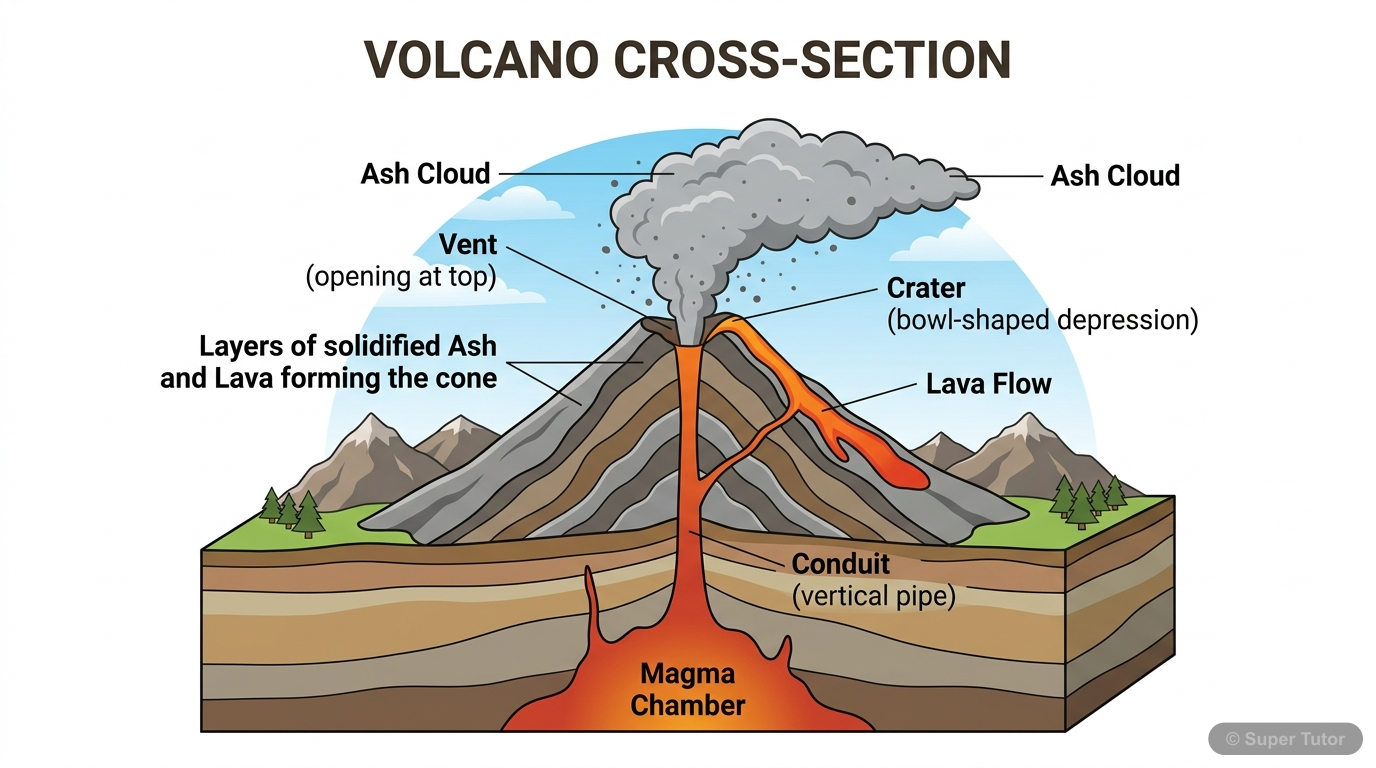
One of 2 illustrations for Volcanoes and Earthquakes in Super Tutor — alongside flashcards, concept maps and practice questions.
Key Topics to Revise
1
1. Concept of Vulcanicity and Volcanoes
- Vulcanicity refers to all processes by which solid, liquid, or gaseous materials are forced into the earth's crust or escape on to the surface.
- Volcanism is another term used for the movement of heated material from the interior toward the surface of the earth.
- Magma is molten rock beneath the earth's crust and is kept under pressure by the overlying rocks.
2
2. Types of Volcanoes
- Volcanoes are classified according to nature of explosion and frequency of eruption.
- According to nature of eruption, the main groups are central eruption type volcanoes, volcanoes of fissure eruption, and mud volcanoes.
- Central eruption type volcanoes erupt through a vent or pipe.
3
3. Volcanic Landforms
- Volcanic eruptions create a variety of landforms.
- Cinder cones form from solid fragments called cinders falling around the crater.
- The average height of a cinder cone is about 300 metres.
4
4. Volcanoes and Human Life
- Volcanoes act as natural safety valves by releasing internal pressure.
- They help in understanding the interior of the earth.
- Volcanic lava forms fertile black soil useful for crops like cotton, wheat, sugarcane, and tobacco.
Get complete notes with diagrams and examples
Full NotesKey Concepts
Vulcanicity includes all processes byA volcano is a suddenVolcanoes eject gasesVolcanoes are classified as central eruptionActive volcanoes erupt at frequent intervals
Frequently Asked Questions
What are the important topics in Volcanoes and Earthquakes for ICSE Class 11 Geography?
Key topics in Volcanoes and Earthquakes include Concept of Vulcanicity and Volcanoes, Types of Volcanoes, Volcanic Landforms, Volcanoes and Human Life. Study these first, then practise questions on each for Class 11 exams.
How should I revise Volcanoes and Earthquakes for Class 11 exams?
Learn the core ideas first, then work through the 44 practice questions on Volcanoes and Earthquakes. Revise definitions regularly and use flashcards for quick recall before the exam.
Sources & Official References
Content is aligned to the official syllabus. Refer to the board website for the latest curriculum.
More resources for Volcanoes and Earthquakes
For serious students
Get the full Volcanoes and Earthquakes chapter — start free.
Quizzes, flashcards, an AI doubt solver and a study plan for ICSE Class 11 Geography. Free to start, no card needed.