Environmental Degradation And Disaster Management — Chapter Summary
NIOS · Class 10 · Social Studies
Summary of Environmental Degradation And Disaster Management for NIOS Class 10 Social Studies. Part of the NIOS Class 10 Social Studies syllabus.
Interactive on Super Tutor
Studying Environmental Degradation And Disaster Management? Get the full interactive chapter.
Quizzes, flashcards, AI doubt-solver and a step-by-step study plan — built for chapter summary and more.
Free trial, no card needed.
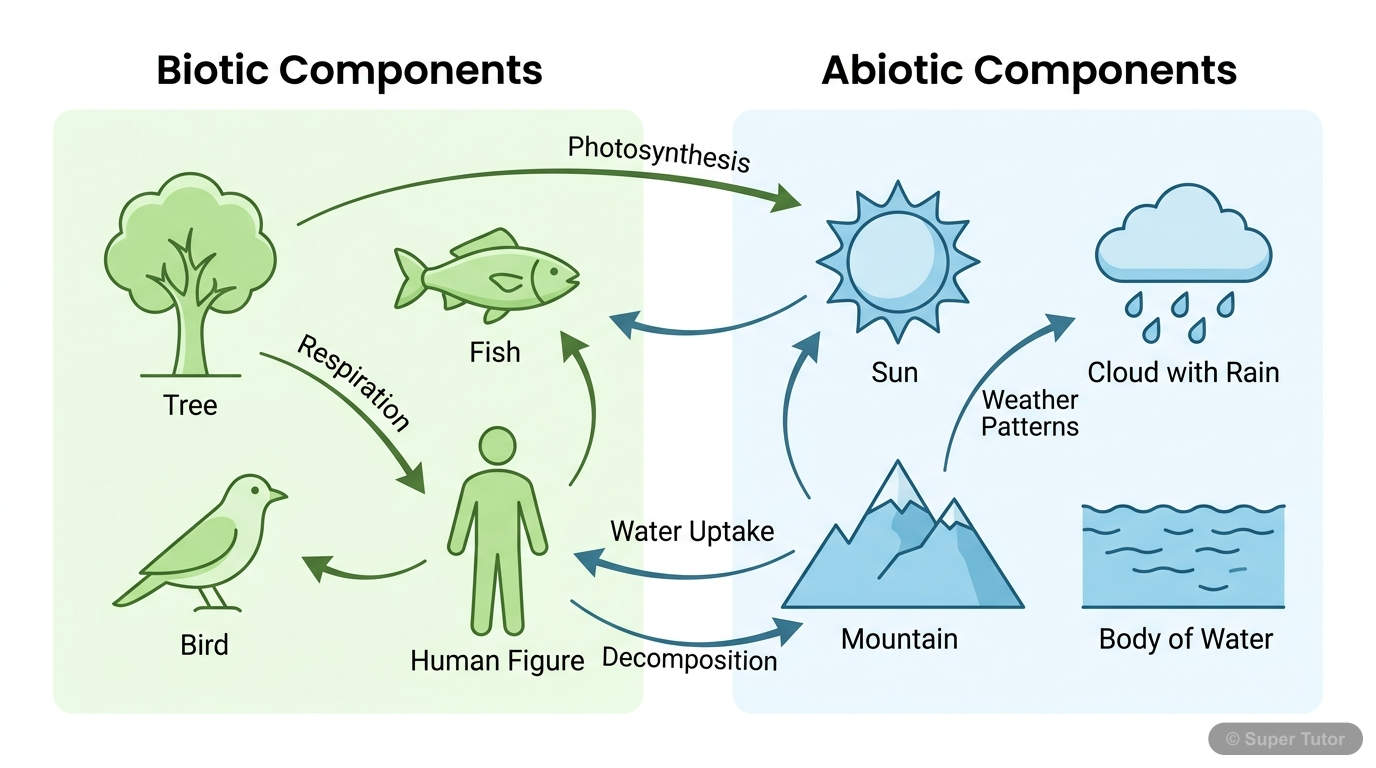
Learn better with visuals Super Tutor pairs illustrations like this with notes and quizzes for Environmental Degradation And Disaster Management.
Overview
Environmental degradation means the progressive damage, pollution, overuse, and destruction of air, water, land, forests, and ecosystems. It is closely connected with disaster management because poor use of resources increases the impact of disasters. Environment is the sum total of all living and n
Key Concepts
Environment is the sum total
Environment is the sum total of all conditions, circumstances, and living and non-living things around an organism that affect its life. It has two ma
The biotic component includes living things
The biotic component includes living things such as human beings, plants, animals, microbes, bacteria, food, and their interactions.
The abiotic component includes non
The abiotic component includes non-living elements such as sunlight, soil, air, water, land, climate, and topography.
Natural environment includes all living
Natural environment includes all living and non-living things that occur naturally on Earth without human intervention.
Human
Human-made environment includes things created by humans for their use, such as houses, roads, schools, hospitals, railway lines, bridges, and parks.
Learning Objectives
- Define environment and identify its biotic and abiotic components.
- Classify environment into natural, human-made, and social types.
- Explain the dynamic nature of environment.
- Describe the importance of environment for life and development.
- Define environmental degradation and identify its major causes.
Frequently Asked Questions
What are the important topics in Environmental Degradation And Disaster Management for NIOS Class 10 Social Studies?
How should I revise Environmental Degradation And Disaster Management for the NIOS Class 10 board exam?
Sources & Official References
Content is aligned to the official syllabus. Refer to the board website for the latest curriculum.
More resources for Environmental Degradation And Disaster Management
For serious students
Get the full Environmental Degradation And Disaster Management chapter — start free.
Quizzes, flashcards, an AI doubt solver and a study plan for NIOS Class 10 Social Studies. Free to start, no card needed.