Modern World-II — Chapter Summary
NIOS · Class 10 · Social Studies
Summary of Modern World-II for NIOS Class 10 Social Studies. Part of the NIOS Class 10 Social Studies syllabus.
Interactive on Super Tutor
Studying Modern World-II? Get the full interactive chapter.
Quizzes, flashcards, AI doubt-solver and a step-by-step study plan — built for chapter summary and more.
Free trial, no card needed.
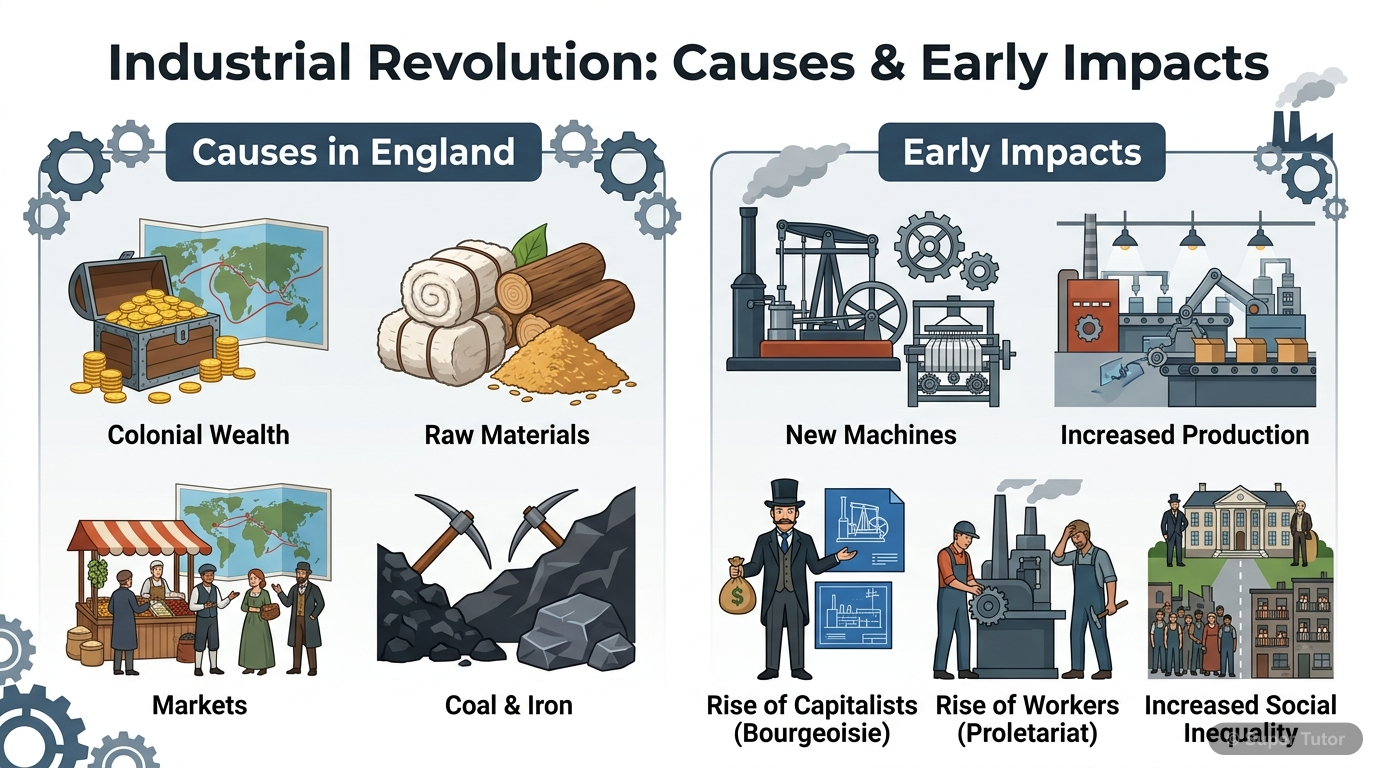
Learn better with visuals Super Tutor pairs illustrations like this with notes and quizzes for Modern World-II.
Overview
The Industrial Revolution changed production, transport, and daily life by replacing hand work with machine work. It began in Britain and later spread to France, Germany, the United States, Japan, and other countries. New inventions in textiles, steam power, coal, iron, and transport created factori
Key Concepts
The Industrial Revolution was the period
The Industrial Revolution was the period in British history from 1750 to 1850 when machine production replaced the domestic system. Factories grew, go
Important textile inventions included the Flying
Important textile inventions included the Flying Shuttle by John Kay in 1733, the Spinning Jenny by James Hargreaves, the Spinning Mule by Samuel Crom
Thomas Newcomen built an engine
Thomas Newcomen built an engine in 1705 to pump water from coal mines. James Watt improved its efficiency fourfold in 1764 and is also credited with t
Coal supplied energy for steam power
Coal supplied energy for steam power. Abraham Darby produced pig iron smelted with coke in 1709, Henry Cort developed wrought iron in 1784, and John W
George Stephenson built the first steam
George Stephenson built the first steam locomotive engine to run on railway tracks in 1814. The first railway line to use locomotive traction and carr
Learning Objectives
- Explain the meaning and impact of the Industrial Revolution
- Identify major inventions in textiles, steam power, coal, iron, transport, and electricity
- Describe the rise of imperialism and colonialism in Asia and Africa
- Understand the causes and effects of World War I
- Explain the growth of Fascism and Nazism between the two world wars
Frequently Asked Questions
What are the important topics in Modern World-II for NIOS Class 10 Social Studies?
How should I revise Modern World-II for the NIOS Class 10 board exam?
Sources & Official References
Content is aligned to the official syllabus. Refer to the board website for the latest curriculum.
More resources for Modern World-II
For serious students
Get the full Modern World-II chapter — start free.
Quizzes, flashcards, an AI doubt solver and a study plan for NIOS Class 10 Social Studies. Free to start, no card needed.