Medieval World — Chapter Summary
NIOS · Class 10 · Social Studies
Summary of Medieval World for NIOS Class 10 Social Studies. Part of the NIOS Class 10 Social Studies syllabus.
Interactive on Super Tutor
Studying Medieval World? Get the full interactive chapter.
Quizzes, flashcards, AI doubt-solver and a step-by-step study plan — built for chapter summary and more.
Free trial, no card needed.
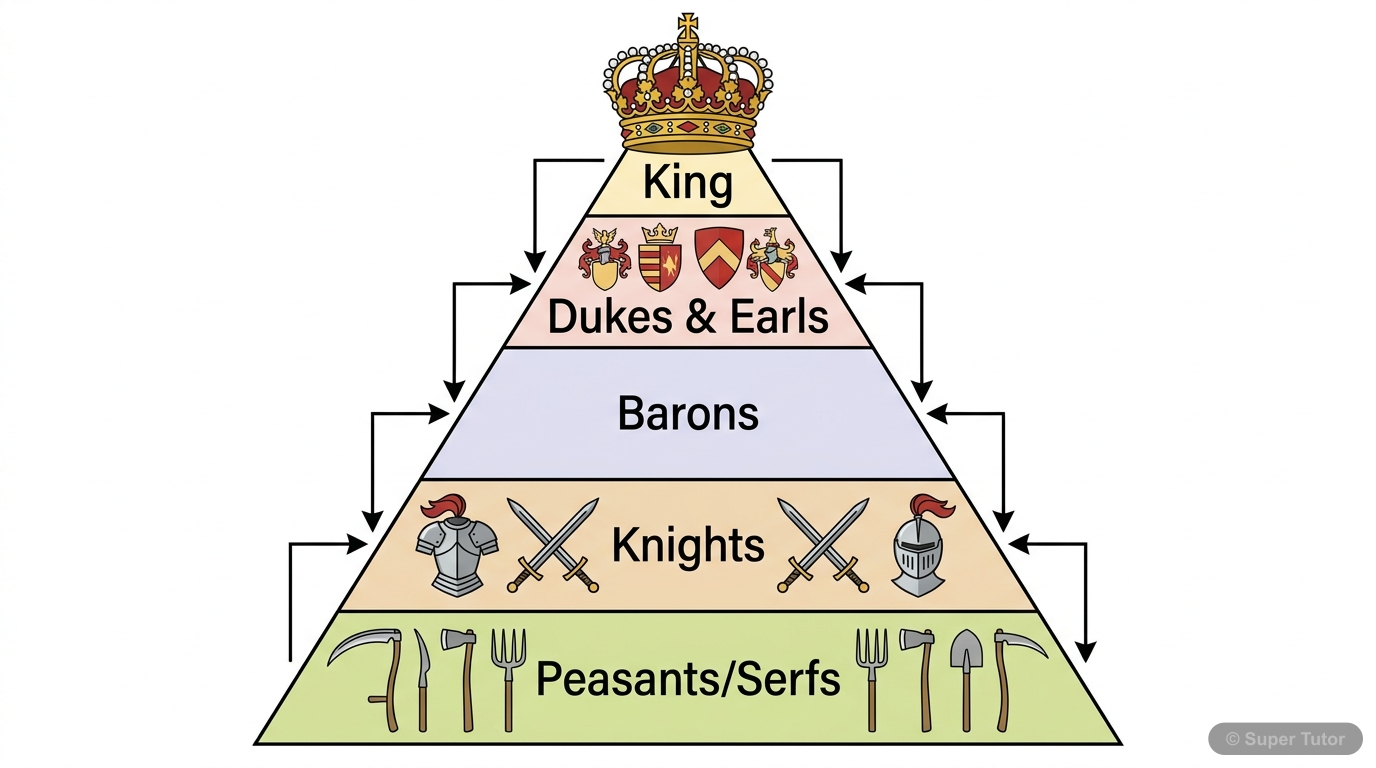
One of 9 illustrations for Medieval World in Super Tutor — alongside flashcards, concept maps and practice questions.
Overview
The Medieval Period was a time of major change in Europe, West Asia, and India. After the fall of the Western Roman Empire, new political systems developed in Europe, especially Feudalism. In West Asia, Islam grew into a great world civilisation. In India, political power became divided after Harsha
Key Concepts
The Western Roman Empire ended
The Western Roman Empire ended in 476 AD after attacks by Germanic tribes such as the Goths, Vandals, Visigoths, and Franks. Constantine had earlier s
Feudalism was a graded system
Feudalism was a graded system of political power in medieval Europe. The king stood at the top, followed by lords, barons, and knights. Lords and vass
The manor was a large landed
The manor was a large landed estate divided into the lord's land, arable land for peasants, and meadowland for grazing. Serfs were dependent peasants
After the 10th century
After the 10th century, Europe saw a revival in agriculture and trade. A heavier wheeled plough drawn by oxen improved farming. The Three Field System
By the 13th century
By the 13th century, population growth, labour surplus, decline in demesnes, technological stagnation, famine, and plague caused a crisis in feudal ec
Learning Objectives
- Identify the Medieval Period as an important stage in human history
- Describe the fall of the Roman Empire and the rise of the Byzantine Empire
- Explain the features of Feudalism in Western Europe
- Understand the origin and spread of Islam
- Recognise the political changes in medieval India after Harsha's decline
Frequently Asked Questions
What are the important topics in Medieval World for NIOS Class 10 Social Studies?
How should I revise Medieval World for the NIOS Class 10 board exam?
Sources & Official References
Content is aligned to the official syllabus. Refer to the board website for the latest curriculum.
More resources for Medieval World
For serious students
Get the full Medieval World chapter — start free.
Quizzes, flashcards, an AI doubt solver and a study plan for NIOS Class 10 Social Studies. Free to start, no card needed.