People’s Participation In The Democratic Process — Chapter Summary
NIOS · Class 10 · Social Studies
Summary of People’s Participation In The Democratic Process for NIOS Class 10 Social Studies. Part of the NIOS Class 10 Social Studies syllabus.
Interactive on Super Tutor
Studying People’s Participation In The Democratic Process? Get the full interactive chapter.
Quizzes, flashcards, AI doubt-solver and a step-by-step study plan — built for chapter summary and more.
Free trial, no card needed.
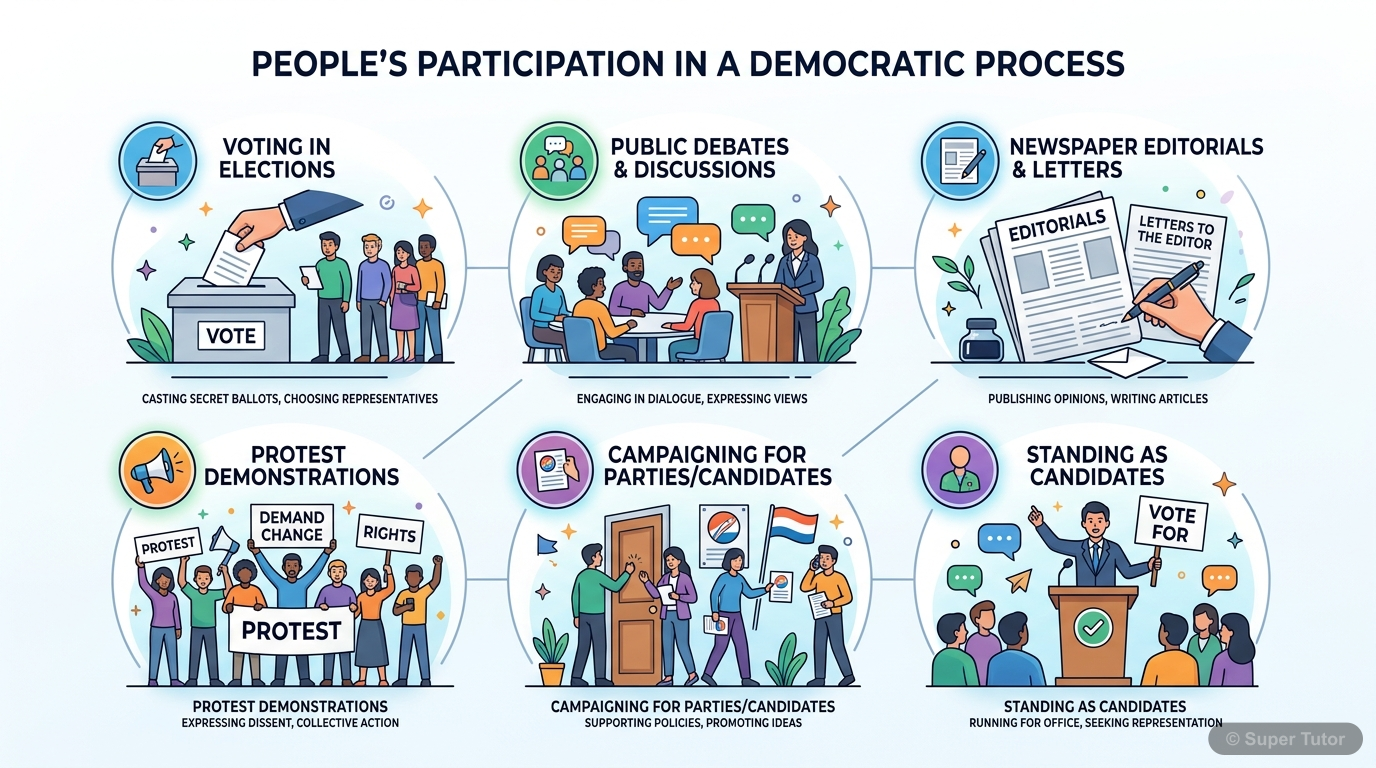
One of 12 illustrations for People’s Participation In The Democratic Process in Super Tutor — alongside flashcards, concept maps and practice questions.
Overview
People’s participation is the active role of citizens in a democracy. It begins with voting but also includes public debates, newspaper editorials, protest demonstrations, political discussion, campaigning, working for political parties, and standing as candidates. Public opinion gives strength to d
Key Concepts
People’s participation means behaviour through
People’s participation means behaviour through which people directly express their political opinions. It includes voting, public debate, participatio
Public opinion is an organized
Public opinion is an organized and considered opinion of the people on issues of public concern. It is not the unanimous opinion of everyone, and it i
Jeremy Bentham
Jeremy Bentham, the British philosopher, developed early theories of public opinion and linked it with the idea that rulers should work for the greate
Public opinion is formed through print
Public opinion is formed through print media, electronic media, political parties, legislatures, and educational institutions. These agencies spread i
Elections are contests among candidates
Elections are contests among candidates for membership in legislative bodies or representative institutions. In India, elections are held for the Lok
Learning Objectives
- Understand the meaning of people's participation in democratic processes
- Explain the meaning and importance of public opinion
- Identify major agencies that help form public opinion
- Describe the electoral system in India
- Distinguish between direct and indirect elections
Frequently Asked Questions
What are the important topics in People’s Participation In The Democratic Process for NIOS Class 10 Social Studies?
How should I revise People’s Participation In The Democratic Process for the NIOS Class 10 board exam?
Sources & Official References
Content is aligned to the official syllabus. Refer to the board website for the latest curriculum.
More resources for People’s Participation In The Democratic Process
For serious students
Get the full People’s Participation In The Democratic Process chapter — start free.
Quizzes, flashcards, an AI doubt solver and a study plan for NIOS Class 10 Social Studies. Free to start, no card needed.