People’s Participation In The Democratic Process — Syllabus
NIOS · Class 10 · Social Studies
What People’s Participation In The Democratic Process covers in NIOS Class 10 Social Studies: 4 topics, for the 2026-27 session.
Interactive on Super Tutor
Studying People’s Participation In The Democratic Process? Get the full interactive chapter.
Quizzes, flashcards, AI doubt-solver and a step-by-step study plan — built for syllabus and more.
Free trial, no card needed.
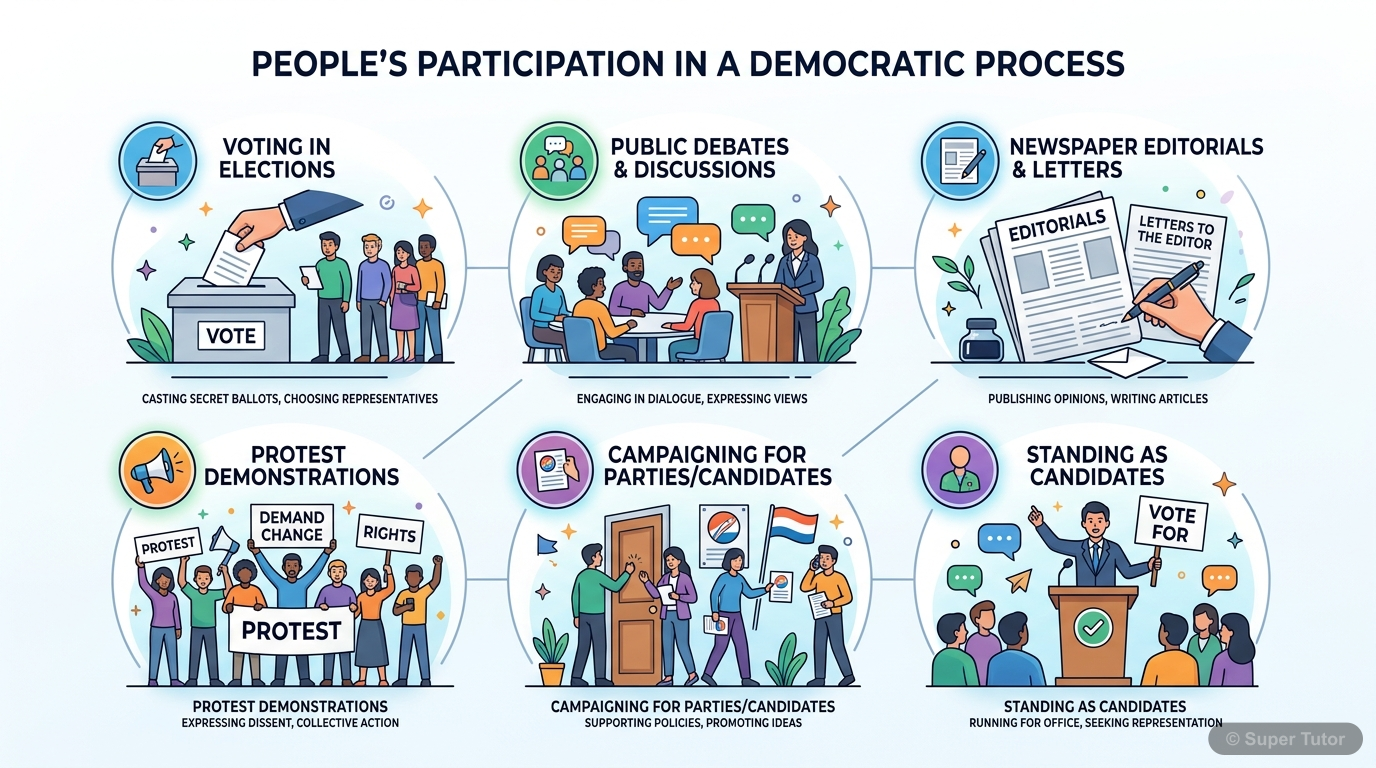
One of 12 illustrations for People’s Participation In The Democratic Process in Super Tutor — alongside flashcards, concept maps and practice questions.
Topics in People’s Participation In The Democratic Process
1. People’s Participation and Public Opinion
- People’s participation means behaviour through which people directly express their political opinions.
- Participation is not limited to voting. It also includes public debates, newspaper editorials, protest demonstrations, political discussion, working for political parties, standing as candidates, and
- People’s participation makes democracy representative and participatory.
2. Agencies That Form Public Opinion
- Print media includes newspapers, periodicals, magazines, and other printed materials.
- Electronic media includes cinema, radio, TV channels, and cell phones.
- Political parties influence opinion through meetings, padyatras, rathyatras, and awareness activities.
3. Elections in India
- Elections allow people to choose representatives for national, state, and local governments.
- Elections are the most important expression of public opinion.
- Elections widen political awareness and educate citizens about public issues.
4. Election Commission and Election Officials
- The Election Commission of India is a constitutional body, not a legal body.
- It is entrusted with conducting free, fair, and impartial elections.
- At present, it has a Chief Election Commissioner and two Election Commissioners.
Key Concepts
Central concept: People’s participation strengthens democracy through voting, public opinion, elections, and electoral institutions
Work through every topic in People’s Participation In The Democratic Process with notes and quizzes
Start This ChapterFrequently Asked Questions
What are the important topics in People’s Participation In The Democratic Process for NIOS Class 10 Social Studies?
How should I revise People’s Participation In The Democratic Process for the NIOS Class 10 board exam?
Sources & Official References
Content is aligned to the official syllabus. Refer to the board website for the latest curriculum.
More resources for People’s Participation In The Democratic Process
Practice Quiz
Test yourself with a quick quiz
Important Questions
Exam-style questions with answers
Revision Notes
Key points for last-minute revision
Chapter Summary
Understand the chapter at a glance
Concept Maps
See how topics connect
Study Plan
Step-by-step plan for this chapter
Flashcards
Quick-fire cards for active recall
For serious students
Get the full People’s Participation In The Democratic Process chapter — start free.
Quizzes, flashcards, an AI doubt solver and a study plan for NIOS Class 10 Social Studies. Free to start, no card needed.