Body fluids and Circulation — Chapter Summary
ICSE · Class 11 · Biology
Summary of Body fluids and Circulation for ICSE Class 11 Biology. Part of the ICSE Class 11 Biology syllabus. Body fluids and circulation form.
Interactive on Super Tutor
Studying Body fluids and Circulation? Get the full interactive chapter.
Quizzes, flashcards, AI doubt-solver and a step-by-step study plan — built for chapter summary and more.
Free trial, no card needed.
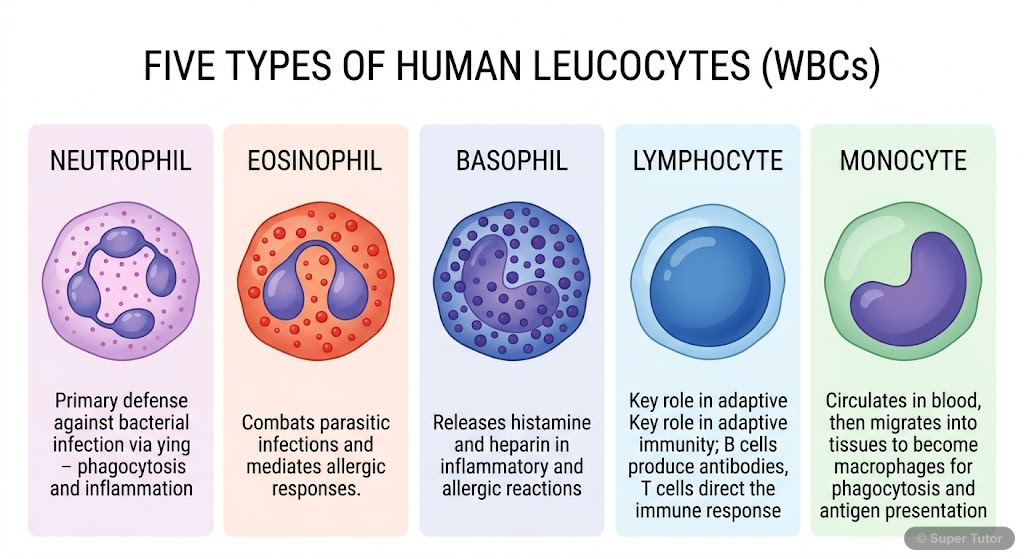
One of 5 illustrations for Body fluids and Circulation in Super Tutor — alongside flashcards, concept maps and practice questions.
Overview
Body fluids and circulation form the transport system of the body. Blood carries oxygen, nutrients, hormones, carbon dioxide, and waste products, while lymph helps in drainage, defence, and return of excess tissue fluid. The human circulatory system works through the heart, blood vessels, blood, and
Key Concepts
The blood vascular system is
The blood vascular system is a circuit of vessels through which blood is kept moving by the continuous pumping of the heart. It includes arteries, cap
An open circulatory system is present
An open circulatory system is present in arthropods and molluscs, where blood flows into open spaces or sinuses. A closed circulatory system is found
The human heart is a hollow
The human heart is a hollow muscular organ situated between the lungs and behind the sternum. It has four chambers: two atria and two ventricles. The
The right atrioventricular valve is
The right atrioventricular valve is the tricuspid valve with three cusps, and the left atrioventricular valve is the bicuspid or mitral valve with two
The SA node is the pacemaker
The SA node is the pacemaker of the heart. It lies in the right atrium near the opening of the superior vena cava and generates 70 to 75 action potent
Learning Objectives
- Understand the difference between open and closed circulatory systems.
- Describe the structure of the human heart and the pathway of blood flow.
- Explain the cardiac cycle, heart rate, stroke volume, and cardiac output.
- Interpret the main waves of ECG and relate them to heart activity.
- Understand blood pressure, its measurement, regulation, and abnormal changes.
Frequently Asked Questions
What are the important topics in Body fluids and Circulation for ICSE Class 11 Biology?
How should I revise Body fluids and Circulation for Class 11 exams?
Sources & Official References
Content is aligned to the official syllabus. Refer to the board website for the latest curriculum.
More resources for Body fluids and Circulation
Practice Quiz
Test yourself with a quick quiz
Important Questions
Exam-style questions with answers
Revision Notes
Key points for last-minute revision
Formula Sheet
The chapter's formulas in one place
Concept Maps
See how topics connect
Study Plan
Step-by-step plan for this chapter
Flashcards
Quick-fire cards for active recall
Syllabus
What topics to cover
For serious students
Get the full Body fluids and Circulation chapter — start free.
Quizzes, flashcards, an AI doubt solver and a study plan for ICSE Class 11 Biology. Free to start, no card needed.