Political Parties — NCERT Solutions
Madhya Pradesh Board · Class 10 · Social Science
NCERT Solutions for Political Parties, Madhya Pradesh Board Class 10 Social Science: 11 textbook questions solved step by step.
Interactive on Super Tutor
Studying Political Parties? Get the full interactive chapter.
Quizzes, flashcards, AI doubt-solver and a step-by-step study plan — built for NCERT solutions and more.
Free trial, no card needed.
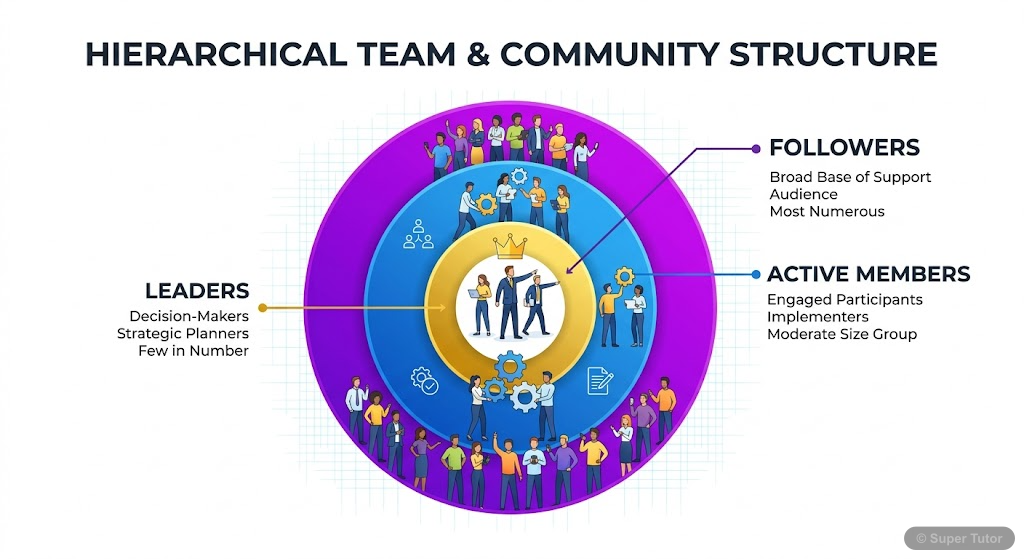
One of 7 illustrations for Political Parties in Super Tutor — alongside flashcards, concept maps and practice questions.
The first 6 solutions are open to read. The other 5 are free with a Super Tutor account.
NCERT Exercises (Class 10 Political Science)
1State the various functions political parties perform in a democracy.Show solution
Functions of Political Parties in a Democracy:
Political parties perform the following key functions:
- Contesting Elections: Parties put up candidates for elections. In most democracies, candidates are either chosen by party leaders or selected through party primaries.
- Policy and Programme Formation: Parties put forward different policies and programmes before the voters. The party that wins a majority gets to implement its policies.
- Making Laws: Parties play a decisive role in making laws for the country. Laws are debated and passed in the legislature, where members largely follow party lines.
- Forming and Running the Government: The party that wins a majority in elections forms the government and runs it. The party controls the executive (cabinet) and makes major decisions.
- Role of Opposition: Parties that lose elections sit in the opposition. They criticise the government's failures and wrong policies, and mobilise opposition to the government.
- Shaping Public Opinion: Parties raise and highlight issues. They have lakhs of members and activists spread across the country who help shape public opinion.
- Access to Government Machinery and Welfare Schemes: Parties provide citizens access to government machinery and welfare schemes. A local party worker is often the link between a citizen and a government official.
Conclusion: Thus, political parties are the most visible institutions in a democracy and perform indispensable functions for its smooth working.
2What are the various challenges faced by political parties?Show solution
Challenges Faced by Political Parties:
Political parties face the following major challenges:
- Lack of Internal Democracy: Power tends to be concentrated in the hands of one or a few leaders at the top. Parties do not hold regular organisational elections, do not share information with members, and ordinary members have little say in decision-making.
- Dynastic Succession: Since most parties are controlled by one family, leadership positions are passed on to family members. This is unfair to other members and is not good for democracy.
- Role of Money and Muscle Power: Parties tend to nominate candidates who can win elections by using money or criminal connections. This has led to the entry of criminals into politics and the growing influence of money in elections.
- Lack of Meaningful Choice: In many countries, voters do not have a meaningful choice because the major parties are very similar in their policies and programmes. If parties do not offer different options, voters feel that changing the party in power does not make a difference.
- Corruption and Scandals: Parties are often rocked by scandals involving top leaders, which erodes public trust.
- Declining Public Trust: People have lost faith in political parties due to their corrupt practices, self-interest, and failure to deliver on promises.
Conclusion: These challenges undermine the effectiveness of political parties and weaken democracy.
3Suggest some reforms to strengthen parties so that they perform their functions well.Show solution
Reforms to Strengthen Political Parties:
- Law on Internal Democracy: A law should be made to regulate the internal affairs of political parties. It should be mandatory for parties to maintain a register of their members, hold organisational elections at regular intervals, and make their accounts public.
- Regulation of Party Finances: There should be state funding of elections. The government should give parties money to support their election expenses. This would reduce the dependence of parties on big donors and black money.
- Quota for Women: At least one-third of the positions in every party should be reserved for women. This would ensure greater representation of women in politics.
- Debarring Candidates with Criminal Records: Parties should be barred from fielding candidates with criminal backgrounds. The Election Commission should enforce this strictly.
- Strengthening the Election Commission: The Election Commission should be given more powers to enforce the Model Code of Conduct and punish parties that violate it.
- Public Pressure and Participation: Citizens, pressure groups, and the media should put pressure on parties to reform. Ordinary citizens should join political parties to improve their quality from within.
- Transparency in Accounts: Parties should be required to publish their accounts and sources of funding so that voters can make informed choices.
Conclusion: Reforms must come both from within parties and through external pressure from citizens and legal mechanisms.
4What is a political party?Show solution
Definition of a Political Party:
A political party is a group of people who come together to contest elections and hold power in the government. They agree on some policies and programmes for the society with a view to promoting the collective good.
Key Elements:
- A political party has three components: (i) the leaders, (ii) the active members, and (iii) the followers.
- Parties try to persuade people that their policies are better than those of other parties.
- They seek to implement their policies by winning elections and forming the government.
Example: The Indian National Congress, the Bharatiya Janata Party (BJP), and the Communist Party of India (Marxist) are examples of political parties in India.
Conclusion: In short, a political party is an organised group that seeks to capture political power through elections in order to implement its policies.
5What are the characteristics of a political party?Show solution
Characteristics of a Political Party:
- Common Policies and Programmes: A political party agrees on certain policies and programmes for the society. Members share a broad agreement on these policies.
- Seeks to Win Elections: A party contests elections and tries to win them in order to form the government.
- Seeks to Hold Power: The ultimate goal of a political party is to hold power in the government and implement its policies.
- Promotes Collective Good: Parties claim that their policies are aimed at promoting the welfare of the whole society, not just a section of it.
- Organised Structure: A party has an organised structure with leaders, active members, and followers.
- Represents a Particular Section or Ideology: Every party represents a particular section of society — a class, a caste, a religion, or an ideology — and tries to articulate the interests of that section.
- Offers Alternative Policies: Parties put forward different policies and programmes before the voters, giving them a choice.
Conclusion: These characteristics distinguish a political party from other organisations like pressure groups or social movements.
6A group of people who come together to contest elections and hold power in the government is called a _______.Show solution
Answer: A group of people who come together to contest elections and hold power in the government is called a Political Party.
Explanation: A political party is defined as an organised group that contests elections with the aim of forming the government and implementing its policies and programmes for the benefit of society.
List I: 1. Congress Party, 2. Bharatiya Janata Party, 3. Communist Party of India (Marxist), 4. Telugu Desam Party
List II: A. National Democratic Alliance, B. State party, C. United Progressive Alliance, D. Left Front
Options: (a) C A B D, (b) C D A B, (c) C A D B, (d) D C A B
Free with a Super Tutor account
A. Kanshi Ram
B. Sahu Maharaj
C. B.R. Ambedkar
D. Jotiba Phule
Free with a Super Tutor account
A. Bahujan Samaj
B. Revolutionary democracy
C. Integral humanism
D. Modernity
Free with a Super Tutor account
A. Political parties do not enjoy much trust among the people.
B. Parties are often rocked by scandals involving top party leaders.
C. Parties are not necessary to run governments.
Which of the statements given above are correct?
(a) A, B, and C
(b) A and B
(c) B and C
(d) A and C
Free with a Super Tutor account
Free with a Super Tutor account
5 more solved questions in Political Parties
They are free with a Super Tutor account, along with practice quizzes and flashcards for this chapter. Free to start, no card needed.
Frequently Asked Questions
What are the important topics in Political Parties for Madhya Pradesh Board Class 10 Social Science?
Are these NCERT Solutions for Political Parties free?
How should I revise Political Parties for the Madhya Pradesh Board Class 10 board exam?
Sources & Official References
Content is aligned to the official syllabus. Refer to the board website for the latest curriculum.
More resources for Political Parties
Practice Quiz
Test yourself with a quick quiz
Important Questions
Exam-style questions with answers
Revision Notes
Key points for last-minute revision
Chapter Summary
Understand the chapter at a glance
Concept Maps
See how topics connect
Study Plan
Step-by-step plan for this chapter
Flashcards
Quick-fire cards for active recall
Syllabus
What topics to cover
For serious students
Get the full Political Parties chapter — start free.
Quizzes, flashcards, an AI doubt solver and a study plan for Madhya Pradesh Board Class 10 Social Science. Free to start, no card needed.