Reproduction — Chapter Summary
NIOS · Class 10 · Science & Tech
Summary of Reproduction for NIOS Class 10 Science & Tech. Part of the NIOS Class 10 Science & Tech syllabus. Reproduction is the biological process by.
Interactive on Super Tutor
Studying Reproduction? Get the full interactive chapter.
Quizzes, flashcards, AI doubt-solver and a step-by-step study plan — built for chapter summary and more.
Free trial, no card needed.
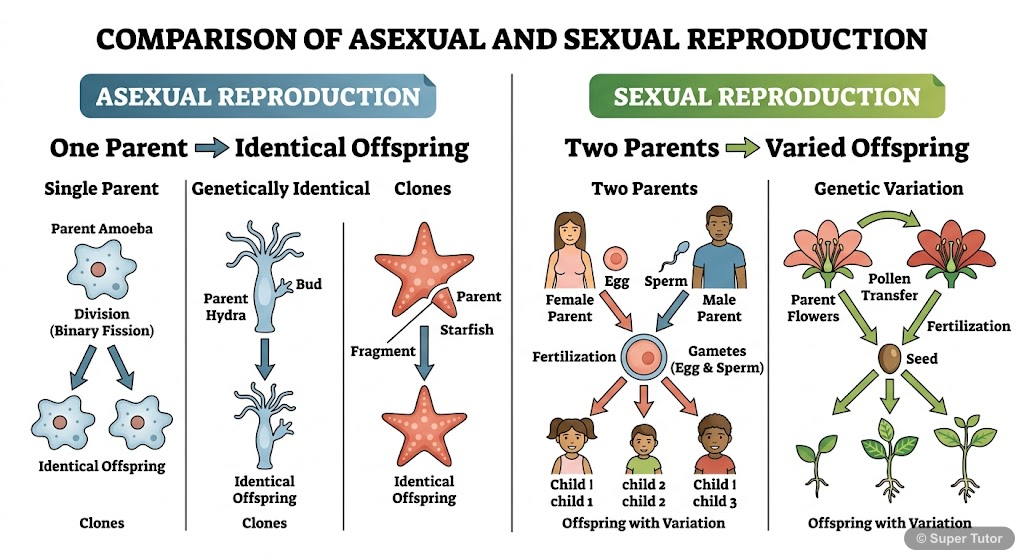
Learn better with visuals Super Tutor pairs illustrations like this with notes and quizzes for Reproduction.
Overview
Reproduction is the biological process by which organisms give rise to their own kind. It is a characteristic feature of all living beings and ensures the continuity of species from one generation to the next. Reproduction occurs in two ways: asexual reproduction and sexual reproduction. Asexual rep
Key Concepts
Reproduction is the biological process by
Reproduction is the biological process by which organisms give rise to their own kind. It may be asexual or sexual. It is essential for the continuity
A species is a group whose
A species is a group whose members can breed with each other and are identified by a Latin name. All humans belong to the species Homo sapiens.
Asexual reproduction occurs from a single
Asexual reproduction occurs from a single individual. It includes binary fission, budding, spore formation, vegetative propagation, micropropagation,
Amoeba and bacteria reproduce by binary
Amoeba and bacteria reproduce by binary fission, in which one cell divides into two individuals.
Yeast reproduces by budding
Yeast reproduces by budding, where a bud forms from the parent body and later becomes a new individual.
Learning Objectives
- Understand reproduction as a basic life process that maintains species continuity.
- Differentiate between asexual and sexual reproduction.
- Describe main types of asexual reproduction in lower organisms and plants.
- Explain the role of flower parts in sexual reproduction in plants.
- Describe pollination, fertilisation, seed formation, and germination.
Frequently Asked Questions
What are the important topics in Reproduction for NIOS Class 10 Science & Tech?
How should I revise Reproduction for the NIOS Class 10 board exam?
Sources & Official References
Content is aligned to the official syllabus. Refer to the board website for the latest curriculum.
More resources for Reproduction
For serious students
Get the full Reproduction chapter — start free.
Quizzes, flashcards, an AI doubt solver and a study plan for NIOS Class 10 Science & Tech. Free to start, no card needed.