Thermal Energy — Chapter Summary
NIOS · Class 10 · Science & Tech
Summary of Thermal Energy for NIOS Class 10 Science & Tech. Key concepts: Heat is a form of energy, J and Clinical thermometers measure.
Interactive on Super Tutor
Studying Thermal Energy? Get the full interactive chapter.
Quizzes, flashcards, AI doubt-solver and a step-by-step study plan — built for chapter summary and more.
Free trial, no card needed.
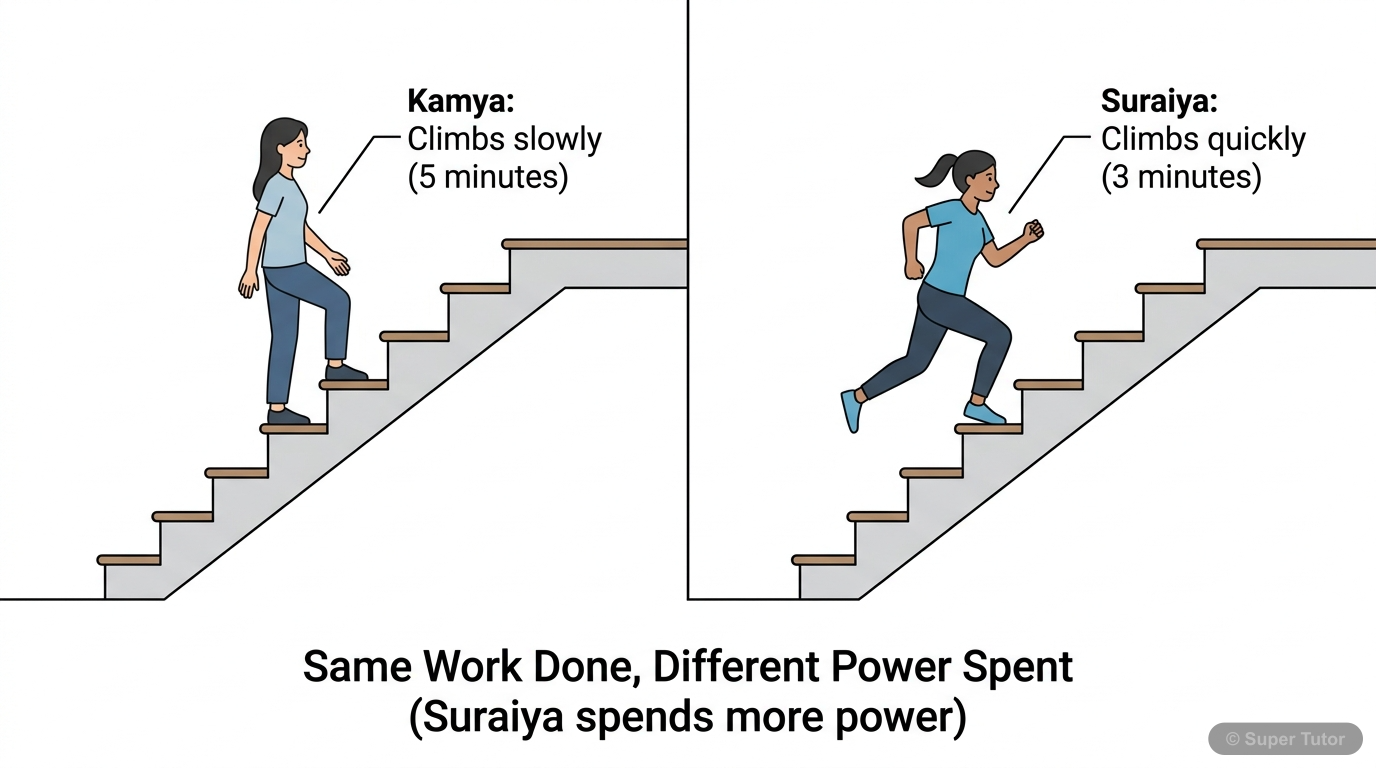
One of 11 illustrations for Thermal Energy in Super Tutor — alongside flashcards, concept maps and practice questions.
Overview
Thermal energy is a form of energy associated with hotness and coldness. Heat can do work and also flows from a body at higher temperature to a body at lower temperature. Temperature measures the degree of hotness or coldness of a body and helps determine the direction of heat flow. Heating can caus
Key Concepts
Heat is a form of energy
Heat is a form of energy. Temperature is the degree of hotness or coldness of a body. Heat flows from higher temperature to lower temperature, so temp
J
J. P. Joule showed that work and heat are equivalent. One Calorie of heat is equivalent to 4.2 Joule of work. Work done against friction is always con
Clinical thermometers measure body temperature
Clinical thermometers measure body temperature, laboratory thermometers measure experiment temperatures, maximum-minimum thermometers record daily ext
The relation among the three scales
The relation among the three scales is (C)/(100) = (F-32)/(180) = (K-273)/(100). This allows conversion from one scale to another.
When a substance changes state
When a substance changes state, heat may be absorbed without a rise in temperature. Latent heat of fusion is the heat needed to convert 1 kg of a soli
Learning Objectives
- Distinguish between heat and temperature
- Explain how heat can do work and how mechanical work can be converted into heat
- Describe the measurement of temperature using different thermometers
- Compare Celsius, Fahrenheit, and Kelvin scales
- Explain latent heat, melting point, boiling point, evaporation, and boiling
Frequently Asked Questions
What are the important topics in Thermal Energy for NIOS Class 10 Science & Tech?
How should I revise Thermal Energy for the NIOS Class 10 board exam?
Sources & Official References
Content is aligned to the official syllabus. Refer to the board website for the latest curriculum.
More resources for Thermal Energy
Practice Quiz
Test yourself with a quick quiz
Important Questions
Exam-style questions with answers
Revision Notes
Key points for last-minute revision
Formula Sheet
The chapter's formulas in one place
Concept Maps
See how topics connect
Study Plan
Step-by-step plan for this chapter
Flashcards
Quick-fire cards for active recall
Syllabus
What topics to cover
For serious students
Get the full Thermal Energy chapter — start free.
Quizzes, flashcards, an AI doubt solver and a study plan for NIOS Class 10 Science & Tech. Free to start, no card needed.