Thermal Energy — Flashcards
NIOS · Class 10 · Science & Tech
40 flashcards for Thermal Energy (NIOS Class 10 Science & Tech) to test yourself on key terms and facts. Sample: "What is temperature?"
Interactive on Super Tutor
Studying Thermal Energy? Get the full interactive chapter.
Quizzes, flashcards, AI doubt-solver and a step-by-step study plan — built for flashcards and more.
Free trial, no card needed.
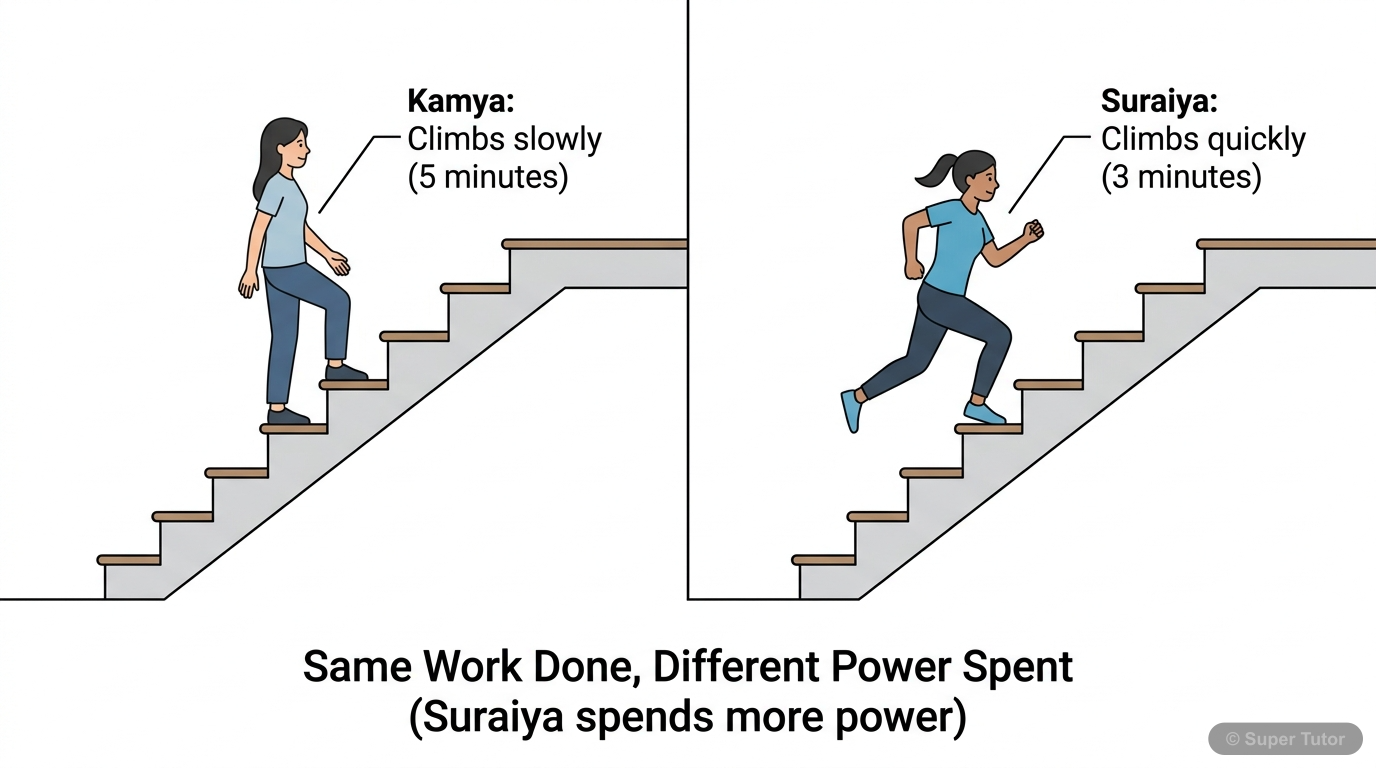
One of 11 illustrations for Thermal Energy in Super Tutor — alongside flashcards, concept maps and practice questions.
What is temperature?
Answer
Temperature is the degree of hotness or coldness of a body due to which it is called warmer or colder. It tells the direction of heat flow: heat always flows from higher temperature to lower temperatu…
What is heat?
Answer
Heat is a form of energy. It can do work. Steam in a kettle can lift the lid because heat energy changes into mechanical work.
Why do we wear woollen clothes in winter?
Answer
Woollen clothes reduce the flow of heat from the body to the cold surroundings. This helps the body stay warmer for a longer time.
How did J. P. Joule show the relation between work and heat?
Answer
J. P. Joule experimentally proved that mechanical work can produce heat. He found that boring a gun barrel with a blunt borer produced so much heat that water near it started boiling.
What is the mechanical equivalent of heat?
Answer
One Calorie of heat is equivalent to 4.2 Joule of work. This shows that heat and work are equivalent forms of energy.
Why does a hot body transfer heat to a cold body?
Answer
Heat always flows from a body at higher temperature to a body at lower temperature. The flow continues until both bodies reach the same temperature.
What is thermal equilibrium?
Answer
Thermal equilibrium is the state when two bodies in contact reach the same temperature. At this stage, heat lost by the hot body equals heat gained by the cold body, if no heat is lost to the surround…
How is heat related to mass and temperature difference?
Answer
Heat transferred is directly proportional to mass and to temperature difference. The relation is Q = msΔθ, where Q is heat transferred, m is mass, s is specific heat capacity, and Δθ is temperature di…
+32 more flashcards
Practise AllFrequently Asked Questions
What are the important topics in Thermal Energy for NIOS Class 10 Science & Tech?
How many flashcards are available for Thermal Energy?
How should I revise Thermal Energy for the NIOS Class 10 board exam?
Sources & Official References
Content is aligned to the official syllabus. Refer to the board website for the latest curriculum.
More resources for Thermal Energy
Practice Quiz
Test yourself with a quick quiz
Important Questions
Exam-style questions with answers
Revision Notes
Key points for last-minute revision
Formula Sheet
The chapter's formulas in one place
Chapter Summary
Understand the chapter at a glance
Concept Maps
See how topics connect
Study Plan
Step-by-step plan for this chapter
Syllabus
What topics to cover
For serious students
Get the full Thermal Energy chapter — start free.
Quizzes, flashcards, an AI doubt solver and a study plan for NIOS Class 10 Science & Tech. Free to start, no card needed.