Physiography Of India — Syllabus
NIOS · Class 10 · Social Studies
What Physiography Of India covers in NIOS Class 10 Social Studies: 4 topics, for the 2026-27 session. Part of the NIOS Class 10 Social Studies syllabus.
Interactive on Super Tutor
Studying Physiography Of India? Get the full interactive chapter.
Quizzes, flashcards, AI doubt-solver and a step-by-step study plan — built for syllabus and more.
Free trial, no card needed.
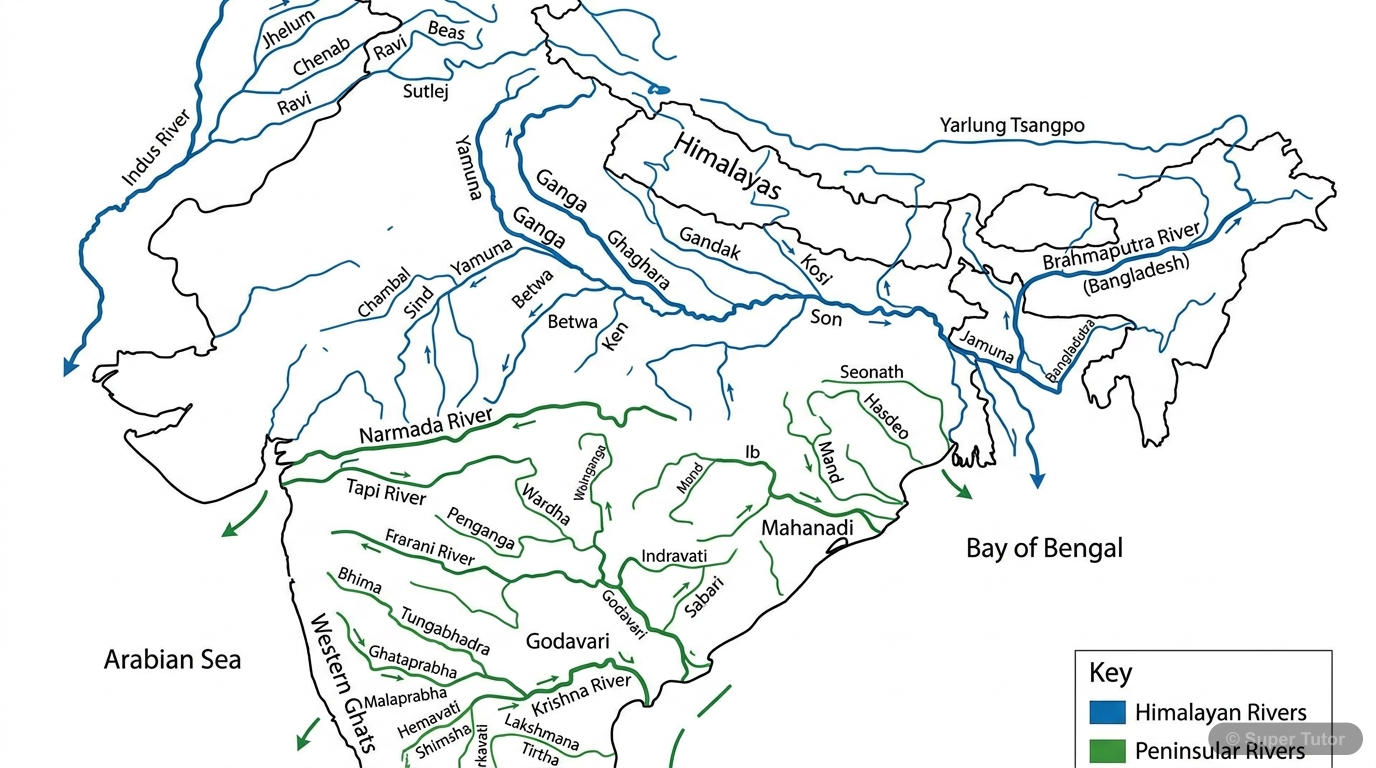
Learn better with visuals Super Tutor pairs illustrations like this with notes and quizzes for Physiography Of India.
Topics in Physiography Of India
1. Location of India
- India's mainland extends between 8°4′N and 37°6′N and 68°7′E and 97°25′E.
- The north-south extent is 3214 km and the east-west extent is 2933 km.
- India lies entirely in the Northern Hemisphere and the Eastern Hemisphere.
2. States and Union Territories
- India has 28 states and 8 union territories.
- New Delhi is the capital of India, while Delhi is the capital of the Union Territory Delhi.
- Chandigarh is the capital of two states, Haryana and Punjab, and also a Union Territory.
3. Major Physical Divisions of India
- India is divided into six physical divisions: the Northern Mountains, the Northern Plains, the Peninsular Plateau, the Indian Desert, the Coastal Plains, and the Islands.
- Topography means the natural features of a place.
- Terrain means an area of land with a particular type of physical feature.
4. The Northern Mountains
- The Northern Mountain region is divided into three groups: the Himalayas, the Trans-Himalayan ranges, and the Purvanchal hills.
- The Himalayas are young fold mountains and form the highest mountain range in the world.
- The Himalayas run for about 2500 km, with width varying from 400 km in the west to 150 km in the east.
Key Concepts
Central concept: Physiography of India
Work through every topic in Physiography Of India with notes and quizzes
Start This ChapterFrequently Asked Questions
What are the important topics in Physiography Of India for NIOS Class 10 Social Studies?
How should I revise Physiography Of India for the NIOS Class 10 board exam?
Sources & Official References
Content is aligned to the official syllabus. Refer to the board website for the latest curriculum.
More resources for Physiography Of India
Practice Quiz
Test yourself with a quick quiz
Important Questions
Exam-style questions with answers
Revision Notes
Key points for last-minute revision
Chapter Summary
Understand the chapter at a glance
Concept Maps
See how topics connect
Study Plan
Step-by-step plan for this chapter
Flashcards
Quick-fire cards for active recall
For serious students
Get the full Physiography Of India chapter — start free.
Quizzes, flashcards, an AI doubt solver and a study plan for NIOS Class 10 Social Studies. Free to start, no card needed.