The First War of Independence ( The Great Uprising of 1857)
ICSE · Class 10 · History & Civics
Summary of The First War of Independence ( The Great Uprising of 1857) for ICSE Class 10 History & Civics. Key concepts, important points, and chapter overview.
Interactive on Super Tutor
Studying The First War of Independence ( The Great Uprising of 1857)? Get the full interactive chapter.
Quizzes, flashcards, AI doubt-solver and a step-by-step study plan — built for chapter summary and more.
1,000+ Class 10 students started this chapter today
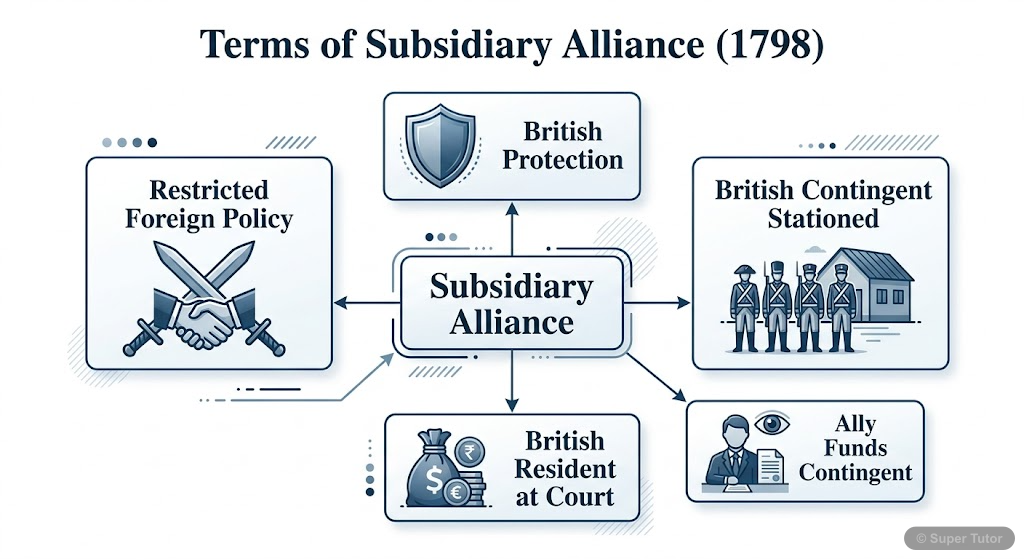
Super Tutor has 5+ illustrations like this for The First War of Independence ( The Great Uprising of 1857) alone — flashcards, concept maps, and step-by-step visuals.
See them allOverview
The Great Uprising of 1857 was a major revolt against British rule in India. It began as a sepoy mutiny at Meerut on 10 May 1857, but soon spread across North India and became a widespread challenge to British authority. The uprising grew from many causes: political annexations, social and religious
Key Concepts
British expansion through the Doctrine
British expansion through the Doctrine of Lapse, annexation of Awadh, and disrespect to Indian rulers created anger among princes and nobles. The refu
The abolition of Sati
The abolition of Sati, the Widow Remarriage Act, laws about inheritance for Christian converts, missionary activity, and taxes on temple and mosque pr
British economic policies drained wealth from
British economic policies drained wealth from India, destroyed handicrafts, increased land revenue, and harmed peasants, zamindars, taluqdars, and edu
Indian sepoys were badly treated
Indian sepoys were badly treated, paid much less than British soldiers, and had no chance of rising above the post of Subedar. The General Service Enl
The greased cartridges of the Enfield
The greased cartridges of the Enfield Rifle sparked the revolt. A rumour spread that they were greased with cow and pig fat, hurting Hindu and Muslim
Learning Objectives
- Understand why the Great Uprising of 1857 broke out
- Identify the political, social, religious, economic, military, and immediate causes
- Recall the main centres of the revolt and their leaders
- Explain the role of important personalities such as Mangal Pandey, Bahadur Shah II, Nana Sahib, and Rani Laxmi Bai
- Describe the British suppression of the uprising in different regions
Frequently Asked Questions
What are the important topics in The First War of Independence ( The Great Uprising of 1857) for ICSE Class 10 History & Civics?
How to score full marks in The First War of Independence ( The Great Uprising of 1857) — ICSE Class 10 History & Civics?
Sources & Official References
Content is aligned to the official syllabus. Refer to the board website for the latest curriculum.
More resources for The First War of Independence ( The Great Uprising of 1857)
Practice Quiz
Test yourself with a quick quiz
Important Questions
Practice with board exam-style questions
Revision Notes
Key points for last-minute revision
Formula Sheet
All formulas in one place
Concept Maps
See how topics connect visually
Study Plan
Step-by-step plan to ace this chapter
Flashcards
Quick-fire cards for active recall
Syllabus
What topics to cover
NCERT Solutions
Every textbook question solved step by step
For serious students
Get the full The First War of Independence ( The Great Uprising of 1857) chapter — for free.
Quizzes, flashcards, AI doubt-solver and a step-by-step study plan for ICSE Class 10 History & Civics.