Kinetic Theory of Gases — Revision Notes
NIOS · Class 12 · Physics
Kinetic Theory of Gases revision notes for NIOS Class 12 Physics: 4 topics in quick points. Part of the NIOS Class 12 Physics syllabus.
Interactive on Super Tutor
Studying Kinetic Theory of Gases? Get the full interactive chapter.
Quizzes, flashcards, AI doubt-solver and a step-by-step study plan — built for revision notes and more.
Free trial, no card needed.
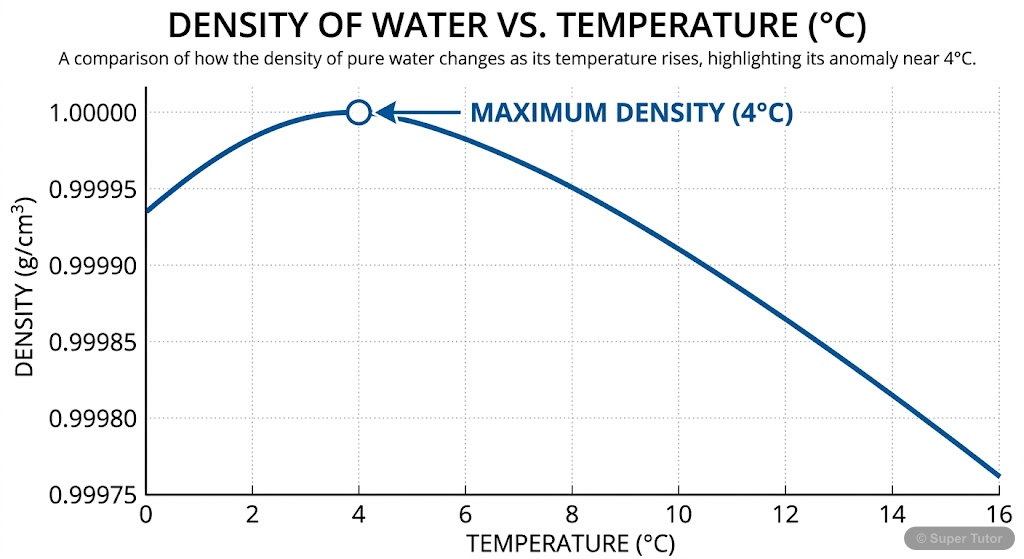
One of 6 illustrations for Kinetic Theory of Gases in Super Tutor — alongside flashcards, concept maps and practice questions.
Key Topics to Revise
Thermal Energy: Heat Capacity and Specific Heat
- Heat and temperature are DIFFERENT concepts: heat is energy transferred due to temperature difference; temperature is a measure of average kinetic energy of molecules.
- Specific heat capacity (C) is the amount of heat required to raise the temperature of 1 kg of a substance by 1°C or 1 K.
- Formula: ΔQ = mCΔθ, where ΔQ = heat supplied (J), m = mass (kg), C = specific heat (J kg⁻¹ K⁻¹), Δθ = temperature rise (K or °C).
Thermal Expansion: Linear, Superficial, and Cubical
- When heat is supplied to a substance, it expands. Expansion can be in length (linear), area (superficial), or volume (cubical).
- All three coefficients are interconnected: β = 2α and γ = 3α
- Linear expansion: Δl = α l₀ Δθ, where α = coefficient of linear expansion (unit: K⁻¹ or °C⁻¹)
Assumptions and Pressure of an Ideal Gas (Kinetic Theory)
- Kinetic Theory connects MACROSCOPIC properties (P, V, T) with MICROSCOPIC properties (mass, speed of molecules).
- An IDEAL GAS is one whose molecules are point masses with no intermolecular forces between them.
- At room temperature and low pressure, real gases behave approximately like ideal gases.
Kinetic Interpretation of Temperature and Mean Kinetic Energy
- Combining PV = (1/3)NmĈ² with ideal gas law PV = nRT gives the kinetic interpretation of temperature.
- Mean kinetic energy per molecule = (1/2)mĈ² = (3/2)kT, where k = Boltzmann constant = 1.38 × 10⁻²³ J K⁻¹
- CRITICAL INSIGHT: Kinetic energy of a molecule depends ONLY on absolute temperature T, NOT on its mass. At the same temperature, all gas molecules (heavy or light) have the SAME average kinetic energy
Get complete notes with diagrams and examples
Full NotesKey Concepts
Frequently Asked Questions
What are the important topics in Kinetic Theory of Gases for NIOS Class 12 Physics?
How should I revise Kinetic Theory of Gases for the NIOS Class 12 board exam?
Sources & Official References
Content is aligned to the official syllabus. Refer to the board website for the latest curriculum.
More resources for Kinetic Theory of Gases
Practice Quiz
Test yourself with a quick quiz
Important Questions
Exam-style questions with answers
Formula Sheet
The chapter's formulas in one place
Chapter Summary
Understand the chapter at a glance
Concept Maps
See how topics connect
Study Plan
Step-by-step plan for this chapter
Flashcards
Quick-fire cards for active recall
Syllabus
What topics to cover
For serious students
Get the full Kinetic Theory of Gases chapter — start free.
Quizzes, flashcards, an AI doubt solver and a study plan for NIOS Class 12 Physics. Free to start, no card needed.